
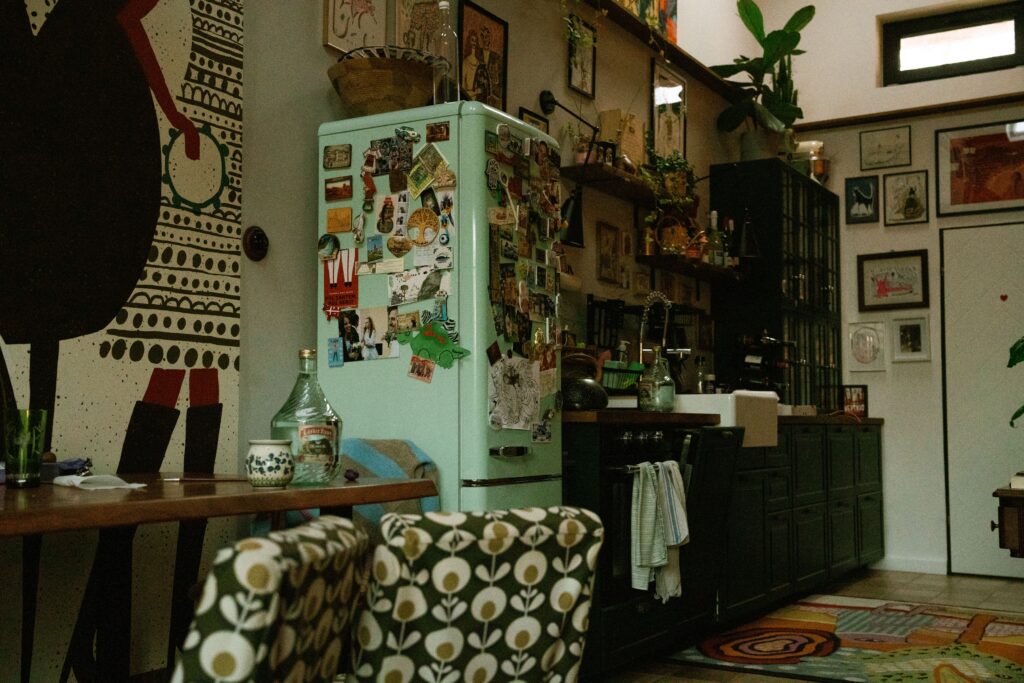
For years I followed the conventional wisdom that kitchens should stay neutral and timeless, because that is what every renovation article told me, and because I was vaguely worried about resale value on an apartment I do not even own. Then I spent a weekend at my aunt’s house, where her kitchen has bottle green cabinets, a wall of patterned tiles, and open shelves crammed with brightly colored ceramics she has collected over thirty years, and I came home questioning everything.
My own kitchen at the time was about as neutral and forgettable as a kitchen could be. White cabinets, white walls, stainless appliances, nothing wrong with any of it and nothing memorable about any of it either. Over the following several months I gradually, deliberately, unapologetically filled it with color, pattern, and personality. It is now the room in my apartment that makes me happiest to walk into, and I want to share exactly how I got there.
1. Understand That Maximalist Kitchen Ideas Are About Curation, Not Chaos
The single biggest misconception about a maximalist kitchen, and the one that held me back for the longest time, is the assumption that it means just adding more of everything without much thought.
Genuine maximalism is the opposite of careless. Every pattern, every color, every collected object in a properly maximalist kitchen has been chosen deliberately, even if the overall effect feels abundant and exuberant. The difference between a maximalist kitchen and a cluttered one is intention, and that distinction matters enormously once you start actually building the look.
My personal test for every addition: I ask myself honestly whether I love a specific object or color, not whether it simply fits some general maximalist mood board I have seen online. My aunt’s kitchen works because every single piece in it means something to her personally. That is the quality I was chasing, not just visual busyness for its own sake.
Pro Tip: Before adding anything to a maximalist kitchen, ask whether you genuinely love it, not whether it looks impressively bold in a photograph. Genuine love for individual pieces is what keeps an abundant kitchen feeling curated rather than overwhelming. For more on this approach check our guide on maximalist living room ideas.
2. Choose One Bold Cabinet Color and Commit Fully
My first instinct was to test a bold color on just one small section of cabinetry, which in hindsight was a mistake, because a single bold cabinet door surrounded by white looks more like an unfinished project than an intentional design choice.
What I eventually did: I painted every lower cabinet in my kitchen a deep, rich forest green, leaving the upper cabinets white for contrast. The full commitment on the lower run is what made the color feel like a genuine design decision rather than a tentative experiment.
Why partial commitment so often fails: A small patch of bold color reads as incomplete, while a fully committed run of color, even if it is just the lower half of your kitchen, reads as confident and deliberate. The visual weight needs enough surface area to feel intentional.
Pro Tip: If you are nervous about a bold color, commit fully to just the lower cabinets first while leaving upper cabinets neutral — this gives you the full maximalist impact with a built-in safety net of lighter surfaces above. For color guidance check our guide on color schemes for small rooms.
3. Install a Patterned Tile Backsplash
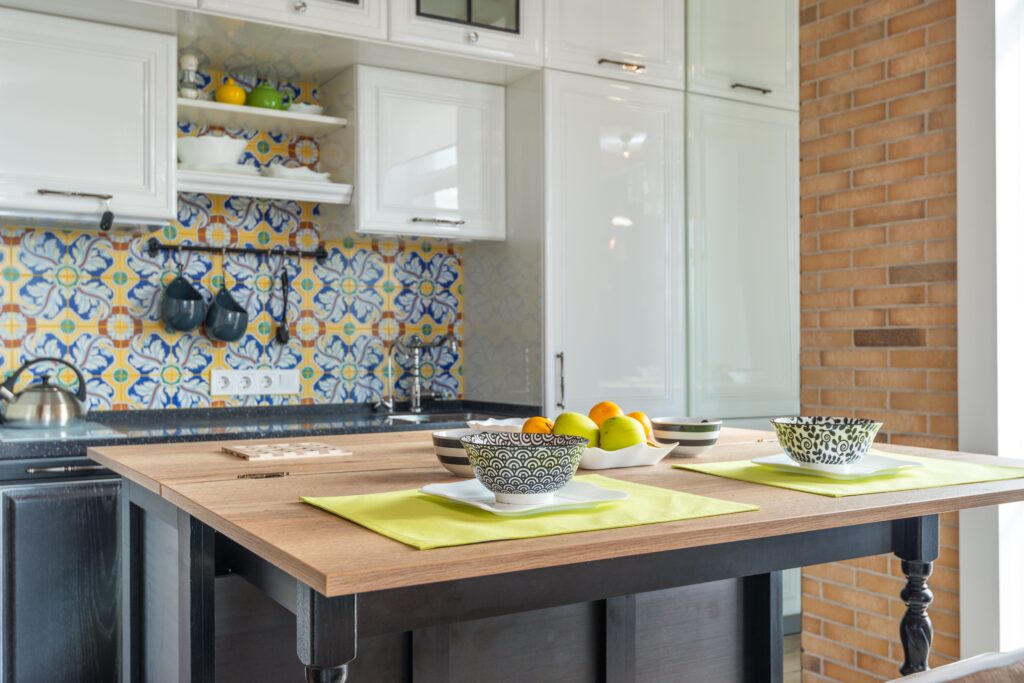
This was the single most expensive change I made, and also the one I am most glad I committed to, because it became the genuine focal point of the entire kitchen.
What I chose: A richly patterned Moroccan-style tile in blues, greens, and warm terracotta tones, covering the wall behind my stove from counter to the underside of my upper cabinets.
Why a backsplash works so well as a maximalist anchor: It occupies a contained, defined area, which means even a genuinely bold, busy pattern does not overwhelm the entire room. Everything else in the kitchen can then be chosen to either echo colors from the tile or sit quietly in the background, giving the whole space a clear sense of order despite its boldness.
Pro Tip: If full tiling is not in your budget, peel-and-stick patterned tile decals can achieve a remarkably similar visual impact for a fraction of the cost and effort, and they are entirely removable for renters. For backsplash ideas check our guide on kitchen decor ideas.
4. Display an Abundant, Color-Coordinated Ceramics Collection
I had been hiding most of my ceramics in cabinets for years, which in retrospect was a genuine waste, because once I started displaying them openly they became one of the most personal and most complimented features in my kitchen.
What I display: Every shelf of my open kitchen storage holds a deliberately curated collection of colorful ceramic plates, bowls, and pitchers, gathered over several years from markets, gifts, and a few genuinely impulsive purchases I do not regret at all.
Why the color coordination matters: My collection spans many different patterns and origins, but every piece sits within a similar warm, earthy color family — terracotta, deep green, mustard, and warm blue. That shared color thread is what keeps a genuinely eclectic, abundant collection looking curated rather than like a thrift store shelf.
Pro Tip: When building a maximalist ceramics collection, buy individual pieces you love rather than matching sets, but keep a mental note of your overall color family so each new piece has somewhere to belong visually. For display ideas check our guide on how to style bookshelves in small spaces.
5. Mix Patterns on Textiles With Confidence
My kitchen now has a striped tea towel, a floral oven mitt, and a geometric patterned table runner, and somehow they all genuinely work together, which surprised even me at first.
The rule that made this possible: Every patterned textile I own for my kitchen shares at least two colors from my overall palette of green, terracotta, and warm mustard. The patterns themselves can be completely different in style, but the shared colors create harmony across the mix.
My honest process for buying textiles now: I take a photo of my existing kitchen palette on my phone and reference it whenever I am tempted by a new patterned item, checking that at least two of its colors genuinely match what I already have before buying anything.
Pro Tip: Buy your boldest, most dominant patterned textile first, then build everything else around its specific color palette rather than trying to coordinate several new patterns simultaneously from scratch. For pattern mixing ideas check our guide on grandmillennial decor ideas.
6. Add a Statement Light Fixture
The original light fixture in my kitchen was a plain flush mount that I genuinely never thought about until I replaced it, at which point I realized how much visual potential had been sitting unused right above my head the whole time.
What I installed: A colorful, sculptural pendant light in deep amber glass, hung above my small kitchen table rather than centered in the room.
Why this addition mattered so much: A statement light fixture adds drama and personality at a height where nothing else in the kitchen is competing for attention, which makes it an unusually efficient way to add maximalist impact without crowding any of your surfaces or shelves.
Pro Tip: Position a statement pendant above a kitchen table or island rather than dead center in the room — the off-center placement creates a clear focal point and adds a designed quality that centered fixtures often lack. For lighting ideas check our guide on small space lighting ideas.
7. Layer In Vintage and Secondhand Finds
Some of my favorite objects in my maximalist kitchen cost almost nothing, because I found them secondhand, and their slightly worn, collected quality adds a depth that nothing brand new quite achieves.
What I have found this way: A set of mismatched vintage glasses with a subtle gold rim, a hand-painted ceramic spoon rest from a market stall, and an old enamel bread bin in a faded mint green that has become one of my favorite objects in the entire apartment.
Why secondhand pieces suit maximalism so well: Genuine maximalism celebrates accumulated personal history rather than a single coordinated purchase, and secondhand objects arrive already carrying some of that history, which is difficult to replicate with anything bought new and matching.
Pro Tip: Visit secondhand shops regularly rather than searching for specific items online — the best maximalist kitchen pieces tend to be unexpected finds rather than items you went looking for with a specific plan in mind. For secondhand decorating ideas check our guide on cottagecore living room ideas.
8. Use Open Shelving as a Gallery, Not Just Storage
I used to think of my open kitchen shelves purely functionally, as a place to put things I needed access to. Reframing them as a genuine display gallery changed how I approach styling them completely.
How I now arrange my shelves: I group ceramics by color in loose clusters, interspersed with a couple of cookbooks turned to show their colorful spines and one small framed print tucked between two stacks of plates.
Why this reframing matters: Treating shelves as a gallery rather than pure storage means I think about height variation, color grouping, and breathing space the same way I would when styling a living room bookshelf, which results in a far more intentional and beautiful display than simply stacking everything by size.
Pro Tip: Leave deliberate empty space between groupings on maximalist kitchen shelves, even in an abundant display — the breathing room between clusters is what keeps the eye able to appreciate each grouping rather than seeing one undifferentiated wall of color. For shelf styling ideas check our guide on how to style bookshelves in small spaces.
9. Add Plants for Living Color and Texture
A maximalist kitchen without any plants always felt slightly incomplete to me, no matter how much pattern and color I had already layered in.
What I have growing: A row of herb pots on my windowsill in mismatched, hand-painted ceramic containers, and one larger trailing pothos on top of a cabinet, allowed to cascade down freely rather than being trained or trimmed.
Why plants matter even in a heavily decorated kitchen: Living greenery adds a layer of genuine, organic color that no painted or printed pattern can fully replicate, and it tends to soften an otherwise very busy visual mix in a way that keeps the room feeling welcoming rather than overwhelming.
Pro Tip: Let trailing plants in a maximalist kitchen grow a little wild and undisciplined rather than keeping them neatly trimmed — the slightly loose, abundant growth suits the overall maximalist mood far better than a tightly controlled shape. For plant ideas check our guide on small space plants ideas.
10. Trust Your Own Taste Over Trends
The final and most important lesson from my own maximalist kitchen journey has nothing to do with any specific product or technique.
What I eventually had to accept: Several people who visited my kitchen during the early stages of this transformation gently questioned the green cabinets, the patterned tiles, and the abundance of color, and for a while their hesitation made me hesitate too.
What changed my mind permanently: I realized that the version of my kitchen I had built to please an imagined critical visitor felt nothing like my aunt’s kitchen, the one that had inspired this whole project in the first place. Hers works because it is unapologetically hers. Mine only started working once I stopped editing it for other people’s comfort and started editing it purely for my own genuine joy.
Pro Tip: When in doubt about a bold maximalist choice, ask yourself whether it makes you personally happy to look at every day, not whether it would photograph well for someone else’s approval — that single shift in perspective is what ultimately makes maximalism work. For more on personal expression in decorating check our guide on maximalist bedroom ideas.
My Final Thoughts
That weekend at my aunt’s house genuinely changed how I think about what a kitchen is allowed to be, and my own kitchen now reflects months of deliberate, joyful accumulation rather than a single safe, neutral decision made to please some imagined future buyer.
The bold cabinet color and the patterned tile backsplash made the biggest single difference for me, but it was the slow layering of collected ceramics and secondhand finds that ultimately made the room feel genuinely mine.
Start with one bold, fully committed color choice this month, even just on your lower cabinets, and let everything else build gradually from there.
Which of these maximalist kitchen ideas speaks to you most? Tell me in the comments, I would genuinely love to know.
For more small space inspiration explore all our articles on Tiny Room Style!