
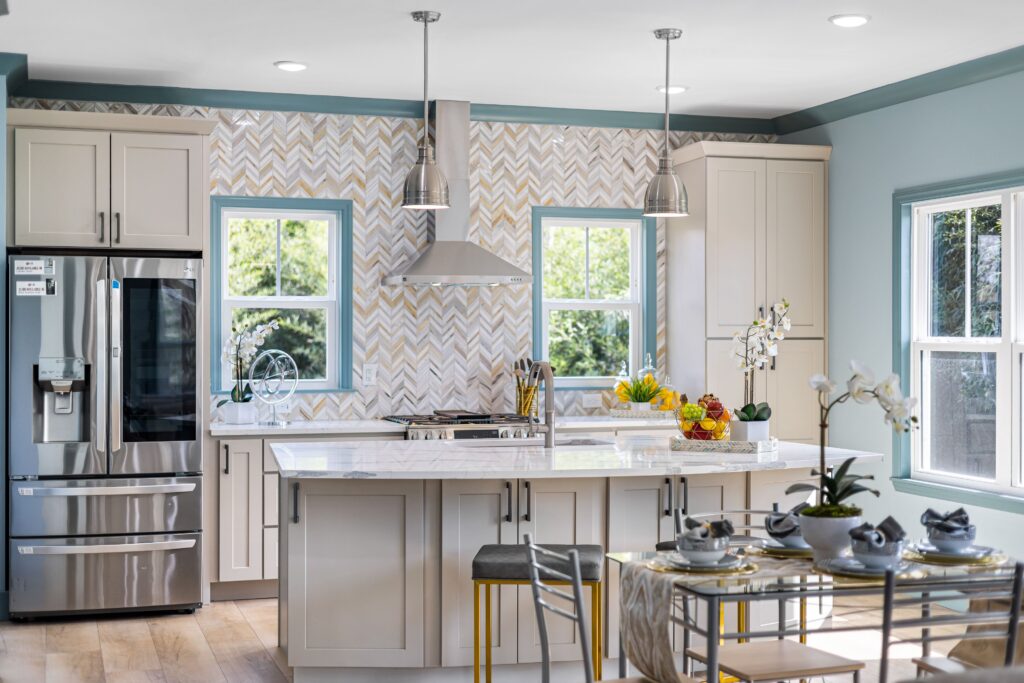
I did not grow up near the ocean. I grew up in a landlocked city, several hours from the nearest beach, and yet somehow I have always been drawn to coastal interiors in a way I cannot fully explain. A few years ago, after a particularly restorative week-long trip to a small coastal town, I came home determined to bring some of that feeling into my own kitchen, which at the time was about as far from breezy and relaxed as a room could be.
My kitchen had dark cabinets, a cramped layout, and a general heaviness that made cooking feel like a chore rather than something enjoyable. Over the following few months I gradually transformed it, piece by piece, into something that genuinely reminds me of that trip every time I walk in. I want to share exactly what I did, because a coastal kitchen does not require living anywhere near water. It requires understanding what actually creates that feeling, and then recreating it deliberately.
1. Understand What Coastal Kitchen Ideas Are Actually Capturing
Before I changed anything, I spent some time thinking about why coastal interiors feel the way they do, because I wanted to avoid the trap of just adding obvious nautical decorations and calling it a day. A rope-wrapped mirror and a few seashells do not create a genuine coastal feeling on their own.
What I eventually understood is that coastal style is really about light, softness, and a sense of unhurried ease. Coastal homes tend to have pale, sun-bleached surfaces because direct sunlight and salt air naturally fade and soften materials over time. They favor natural fibers because synthetic materials simply were not historically available or practical near the sea. And they prioritize a relaxed, slightly imperfect quality over anything too polished or precise, because life near the coast tends to be more casual.
What this meant for my kitchen: I stopped looking for specific “coastal” branded products and started looking for qualities instead — does this feel light, does this feel soft, does this feel relaxed rather than formal. That shift in thinking guided every decision that followed.
Pro Tip: Before buying anything for a coastal kitchen, ask whether it makes the space feel lighter and more relaxed, or whether it just looks beachy in an obvious, themed way. The first kind of choice ages well. The second kind starts to feel dated quickly. For more coastal inspiration check our guide on coastal living room ideas.
2. Lighten Your Cabinets However You Can
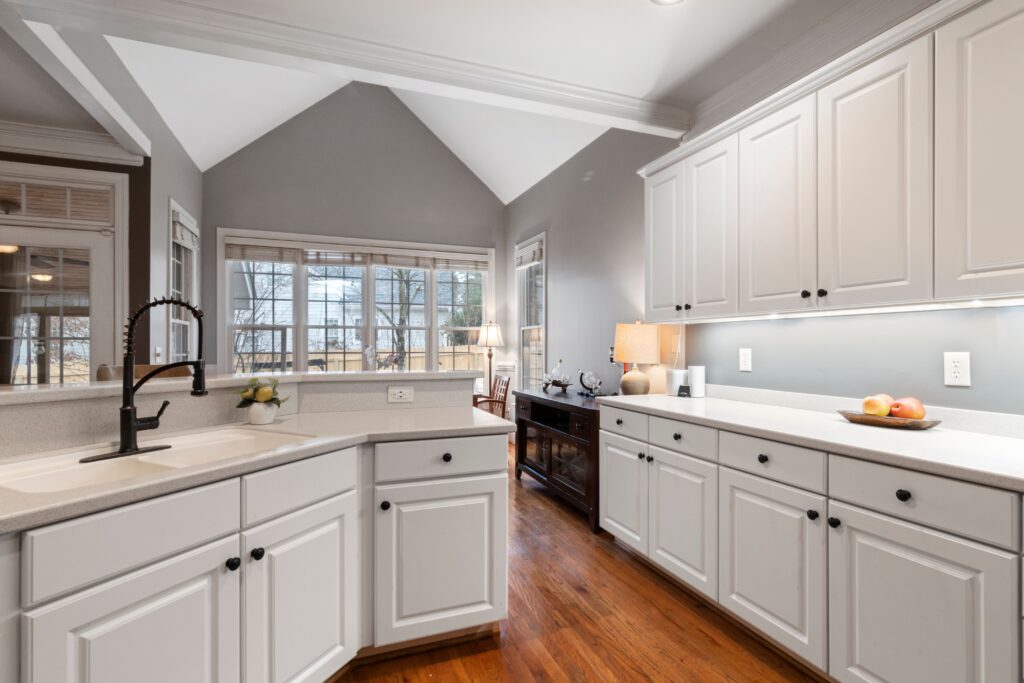
My original cabinets were a dark, slightly dated wood tone that absorbed light rather than reflecting it, and they were genuinely the biggest obstacle to any coastal feeling in my kitchen.
What I did: I could not afford to replace my cabinets entirely, so I had them professionally painted in a warm, slightly off-white shade rather than going for the most common pure white. The slight warmth in the white keeps it from feeling sterile, which matters enormously in a coastal kitchen, where the goal is relaxed warmth rather than clinical brightness.
The transformation this created: The same kitchen, in the same layout, with the same appliances, suddenly felt about twice as bright simply because light was bouncing around the room instead of being absorbed by dark wood. Everything else I added afterward looked more coastal almost automatically once this foundation was in place.
Pro Tip: If a full repaint is not possible right now, even painting just the lower cabinets and leaving upper cabinets as open shelving can dramatically shift the light and feel of a kitchen for a fraction of the cost. For kitchen color guidance check our guide on color schemes for small rooms.
3. Bring in Soft Blue Through Textiles Rather Than Walls
I was initially tempted to paint a wall a deep ocean blue, and I am genuinely glad a friend talked me out of it. In a small kitchen, a bold dark color can quickly feel heavy rather than breezy.
What I did instead: I introduced blue through a striped linen tea towel, a soft blue and white ceramic jug I use for utensils, and a set of cloth napkins in a similar pale, dusty blue. None of these commitments are permanent, and together they create exactly the soft pop of ocean color I was originally hoping the wall would provide.
Why textiles work better than paint for this: A textile choice can be subtle, layered, and changed seasonally without any real cost or effort. A wall color is a much bigger and more permanent decision, and in my experience the softer, more breezy coastal feeling comes through more successfully in small textile doses than in one large saturated surface.
Pro Tip: Choose a pale, slightly faded blue rather than a bright, saturated one for coastal textiles — the gentler tone reads as sun-bleached and relaxed rather than bold and graphic. For textile color ideas check our guide on color schemes for small rooms.
4. Install Open Shelving and Display Mismatched White Ceramics
This was the single change that most visitors comment on when they see my kitchen now, and it came from genuinely just running out of cabinet doors I liked the look of.
What I did: I removed the doors from two upper cabinets entirely, turning them into open shelves, and gradually filled them with a deliberately mismatched but tonally consistent collection of white and cream ceramic dishes, bowls, and pitchers, most of which I have picked up secondhand or at markets over the past couple of years.
Why mismatched pieces work here: A perfectly matched set of white dishes looks slightly corporate and showroom-like. A collection gathered slowly, with slightly different shapes and glazes but a consistent pale, sun-bleached color palette, looks lived-in and personal in exactly the way a real coastal home develops over years rather than overnight.
Pro Tip: Keep everything on open coastal shelving within a narrow color range, ideally white, cream, and pale blue, even if the shapes and origins vary considerably — color consistency is what makes a mismatched collection look intentional rather than accidental. For open shelf styling check our guide on kitchen decor ideas.
5. Hang Sheer Curtains Instead of Heavy Ones
My kitchen window previously had a fairly heavy, dark roman blind that blocked a surprising amount of light even when fully open.
What I replaced it with: A simple sheer white linen curtain panel, hung loosely on a slim rod. It filters the light beautifully rather than blocking it, and it moves gently whenever I open the window, which sounds like a small detail but genuinely adds to the breezy feeling I was chasing.
Why this mattered more than I expected: Natural light is one of the defining qualities of coastal interiors, and almost nothing undermines it faster than heavy window treatments. Switching to something sheer let in dramatically more daylight throughout the day without sacrificing any meaningful privacy in my kitchen specifically.
Pro Tip: Hang sheer curtains as close to the ceiling as your window setup allows rather than just at the top of the window frame — the extra height makes the window, and the whole kitchen, feel taller and airier. For more window treatment ideas check our guide on how to make a small living room look bigger.
6. Add a Rattan or Woven Pendant Light
The overhead light fixture I inherited with my kitchen was a plain glass dome that did the job functionally but added nothing visually.
What I replaced it with: A simple woven rattan pendant light, hung at the same height as the original fixture. It diffuses light in a softer, more textured way, and the natural material immediately adds a layer of organic warmth that a plain glass fixture simply cannot provide.
The impact beyond just light quality: Even with the light switched off during the day, the rattan pendant itself is a beautiful object hanging in the room. It does double duty as both functional lighting and as a piece of natural texture that anchors the whole coastal feeling overhead.
Pro Tip: Make sure any woven pendant you choose for a kitchen is rated for the level of humidity and occasional grease in the air near a stove — position it slightly away from your direct cooking area if possible to keep it looking fresh longer. For lighting ideas check our guide on small space lighting ideas.
7. Display Dried Botanicals Instead of Fresh Flowers
I love fresh flowers, but I found that in a kitchen specifically, dried botanicals suit the coastal feeling even more naturally, and they do not wilt within days of being near a warm stove.
What I display: A simple ceramic pitcher filled with dried pampas grass on my counter, and a small bunch of dried eucalyptus tied with twine hanging from a cupboard handle.
Why dried works so well here: Dried botanicals have exactly the sun-bleached, slightly faded quality that defines coastal style. They also genuinely last for months in a kitchen environment, which matters in a room where fresh flowers tend to struggle with heat and humidity from cooking.
Pro Tip: Choose pale, neutral-toned dried botanicals like pampas grass or bunny tail grass rather than anything too colorful — the muted tone fits the coastal palette far better than dried flowers that retain bright color. For botanical display ideas check our guide on coastal living room ideas.
8. Use Natural Wood for Cutting Boards and Utensils
This is a small detail, but it added up to more visual warmth than I expected.
What I changed: I replaced my plastic cutting boards and utensil holder with light, natural wood versions, and I now lean a beautiful large wooden cutting board against my backsplash as a permanent, almost decorative feature rather than hiding it in a drawer.
Why this matters in a coastal kitchen specifically: Driftwood and weathered natural wood are core to the coastal aesthetic, and light wood tones bring in that same organic, sun-touched warmth without requiring any major purchase or renovation. It is one of the most affordable coastal upgrades on this entire list.
Pro Tip: Choose a cutting board with visible grain and a lighter, more weathered-looking wood tone rather than a dark, heavily varnished one — the lighter, more natural finish fits the coastal palette far more convincingly. For more natural material ideas check our guide on scandinavian small space decor.
9. Add a Woven Basket for Produce or Linens
A simple woven basket on my counter, holding fresh produce, became one of my favorite small additions, mostly because it is both genuinely useful and visually perfect for the aesthetic.
What I use mine for: Fresh fruit and onions, displayed openly rather than hidden in a drawer. The natural texture and slightly imperfect, handwoven quality of the basket itself does a lot of visual work in a kitchen that otherwise has fairly clean, simple surfaces.
Why baskets fit coastal kitchens so naturally: Coastal homes have historically relied on woven natural materials for storage long before plastic containers existed, so a woven basket carries that same sense of practical, unfussy history that defines the whole aesthetic.
Pro Tip: Choose a basket with a slightly open, loose weave rather than a tightly woven one — the looser texture reads as more relaxed and coastal, while a tight weave can look slightly more formal. For storage ideas check our guide on how to organize a small kitchen.
10. Keep It Genuinely Uncluttered
The final lesson took me the longest to learn, mostly because I kept wanting to add just one more coastal-feeling object to my counters.
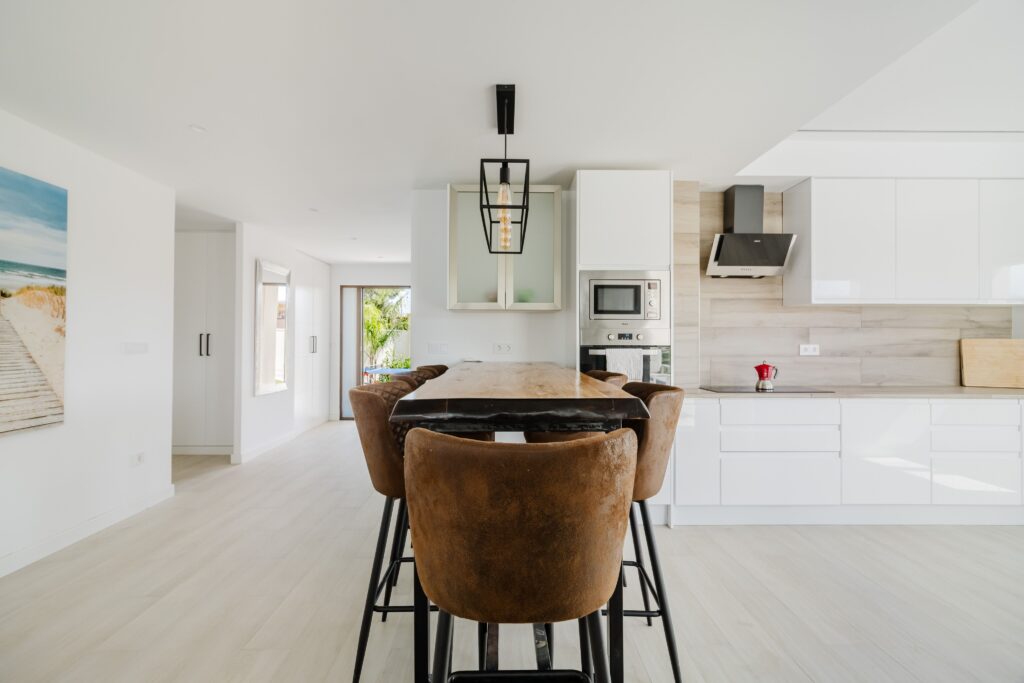
What I eventually realized: Coastal kitchens feel relaxed partly because they are not crowded. A counter covered in objects, however individually beautiful, starts to feel busy and undermines the calm, breezy quality that is the entire point of the style.
My current rule: Only my fruit basket, my wooden cutting board, and my kettle live permanently on my counters. Everything else gets put away after use, which took some discipline to maintain at first but now feels completely natural.
Pro Tip: Every few months, do a quick audit of what has quietly accumulated on your counters and remove anything that does not serve a daily purpose or add genuine beauty — coastal calm depends on this kind of regular editing as much as it depends on any single decorating choice. For more on maintaining a calm space check our guide on small space living tips.
My Final Thoughts
That week-long coastal trip a few years ago changed something in me that I did not fully understand until I started recreating its feeling in my own kitchen, room by room, decision by decision. I still do not live anywhere near the ocean, but every morning when I walk into my kitchen now, something in me settles in exactly the way it did on that trip.
The lighter cabinets, the open shelving, and the sheer curtains made the single biggest difference for me personally, but every change on this list contributed something to the overall feeling.
Start with your window treatment if nothing else — letting in more natural light is the foundation everything else in a coastal kitchen builds on.
Which of these coastal kitchen ideas would make the biggest difference in your own space? Tell me in the comments, I would genuinely love to know.
For more small space inspiration explore all our articles on Tiny Room Style!