
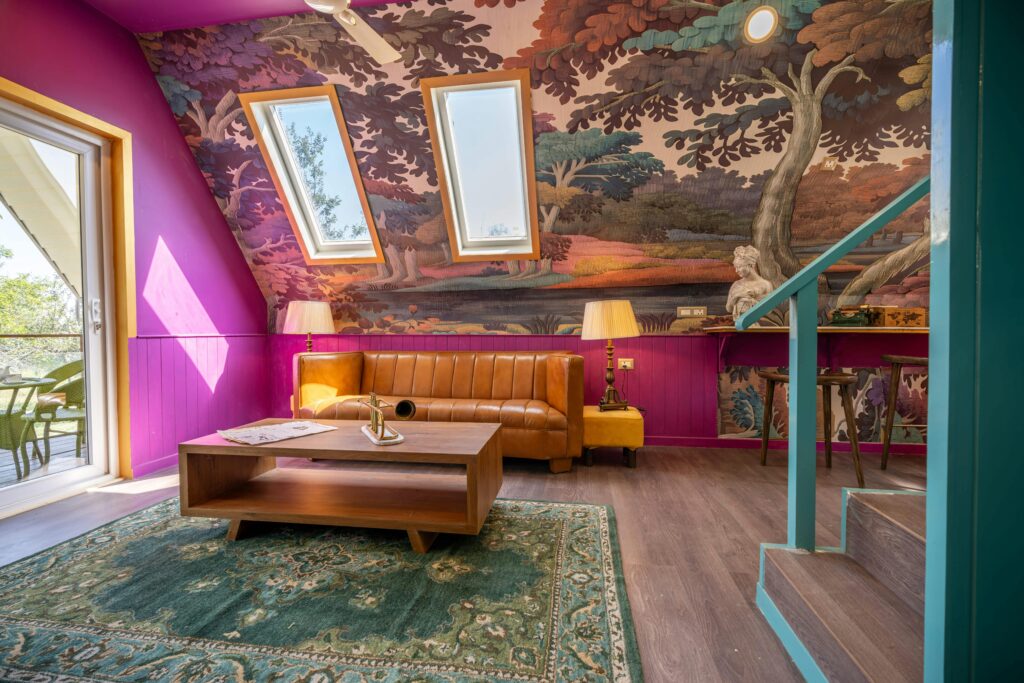
I spent three years trying to be a minimalist. I read the books, watched the videos, decluttered repeatedly. And every single time I decluttered, I felt vaguely sad — like I was removing pieces of myself along with the objects.
Then one afternoon I visited my friend Priya’s living room and understood immediately what had been wrong. Her living room was full — full of color, pattern, art, plants, books, and objects from a life genuinely lived. It was warm, joyful, and completely, specifically her.
I went home that evening and started bringing things back. Six months later I had the most beautiful living room I had ever created — and it was the fullest one I had ever had too.
Here is everything I learned!
1. Maximalism Is Curated Abundance — Not Clutter
Before anything else, I need to address the biggest misconception about maximalist living room ideas — that maximalism means clutter.
It absolutely does not.
The difference between a maximalist living room and a cluttered one is intentionality. Clutter is accidental accumulation — things that ended up somewhere without being chosen. Maximalism is curated abundance — everything chosen with genuine love and displayed with real intention.
My test for every object: Do I genuinely love this? Did I actively choose it? Does it contribute to the atmosphere I am creating? If the answer to any of these is no — it does not belong in a maximalist living room.
My experience: When I first attempted maximalism, my living room looked messy. When I understood that maximalism requires MORE curation — just of abundance rather than restraint — everything changed dramatically.
Pro Tip: Before adding anything new to your maximalist living room, ask yourself honestly — do I genuinely love this? Not “is it useful” or “does it look nice.” Do I genuinely love it? Only things you genuinely love deserve space in a maximalist room. For maximalist bedroom ideas check our guide on maximalist bedroom ideas.
2. Choose One Bold Foundation Color
The biggest mistake I made in my first maximalist attempt was using too many unrelated colors. Individual elements were beautiful but nothing connected — my living room looked like a paint sample explosion.
The fix was choosing one dominant bold color and building everything else around it.
My choice: Deep forest green on my main wall. Everything else — the burgundy cushions, the terracotta plant pots, the warm gold accessories — all relate back to that green foundation.
Why it works: A dominant bold color gives your maximalist living room a visual anchor. No matter how many different patterns and objects you add, the eye always returns to that foundation color and finds coherence.
The best maximalist foundation colors:
- Deep forest green — rich, sophisticated, works with almost everything
- Rich navy — dramatic and timeless
- Warm burgundy — intimate and luxurious
- Deep terracotta — warm and grounding
What I did: I painted just my main wall first — the wall behind my sofa. After one week I loved it so much I painted two more walls. Start with one and see how you feel.
Pro Tip: The wall behind your sofa is the most impactful wall in any living room — start your bold maximalist color there and the rest of the room will immediately feel more intentional and more beautiful. For color ideas check our guide on color schemes for small rooms.
3. Build Your Gallery Wall Slowly
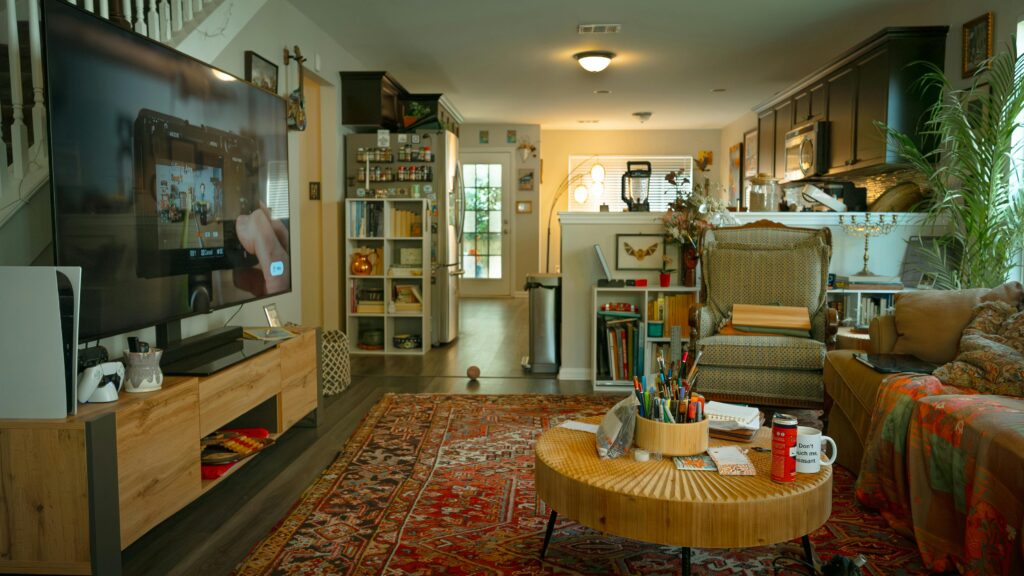
My gallery wall took nine months to build. When I tell people this they are surprised — they expected a weekend project.
But that is exactly why it looks the way it does.
Month one: Three prints from a local market. Arranged in a rough triangle.
Month three: A personal photograph from my most meaningful trip. A small mirror from a thrift store for $8.
Month six: Two more art prints found at different markets. A small floating shelf with a plant and candle added to the arrangement.
Month nine: A piece of art I made myself — genuinely terrible by any objective standard but deeply meaningful. A final photograph. Done.
The result is a wall that tells my story. Not a wall that looks assembled in one afternoon from a home decor store.
My gallery wall rule: Every piece must come from a different source — markets, thrift stores, online artists, your own photography, things you make yourself. The eclectic sourcing creates the most authentically personal and most beautiful maximalist gallery wall possible.
Pro Tip: Never buy an entire gallery wall collection from one store — the pieces will all look related and the gallery will look purchased rather than collected. Mix sources, mix price points, mix personal and impersonal. For gallery wall ideas check our guide on small space wall decor ideas.
4. Mix Patterns Using the One Rule
Pattern mixing frightened me for years. I thought it required innate design talent I did not have. Then a designer friend told me the one rule and I have never looked back.
The one rule: All patterns must share at least two colors.
That is genuinely it. Your patterns can be completely different — florals, geometrics, stripes, tribal, botanical — but if they share the same color family they will work together.
My pattern mix:
- Large floral sofa — burgundy, forest green, cream, gold
- Geometric cushions — burgundy and cream
- Striped throw — forest green and cream
- Persian rug — burgundy, forest green, navy, gold
- Botanical curtains — forest green and cream
Five completely different patterns. One consistent color family. The result looks rich and curated rather than chaotic.
How I shop for patterns: I buy my dominant pattern first — usually my rug or my sofa. Then I find secondary patterns that share its colors. Working from one anchor pattern outward is infinitely easier than mixing from scratch.
Pro Tip: Take a photograph of your dominant pattern — your sofa fabric or your rug — and use it as a reference when shopping for secondary patterns. If the new pattern shares at least two colors with your photograph, it will work. For pattern mixing ideas check our guide on grandmillennial decor ideas.
5. Layer Textiles Generously
The first evening I put eight cushions on my sofa, my flatmate laughed.
Three months later she had seven cushions on her own sofa.
In a maximalist living room, textiles are not functional accessories — they are visual and tactile layers that create warmth, richness, and the sense of abundant comfort that defines great maximalist spaces.
My current textile layers:
- Eight cushions on the sofa — different sizes, patterns, and textures — velvet, embroidered cotton, chunky knit, woven, and silk
- Two throws — one velvet draped over the sofa arm, one chunky knit over the armchair
- A large Persian rug as base layer
- A smaller geometric rug layered on top
- Deep forest green velvet curtains from ceiling to floor
The layering creates a living room that is not just visually rich but physically warm and inviting — the kind of room you sink into and never want to leave.
Pro Tip: Rug layering — placing a smaller rug on top of a larger one — is the most impactful and most affordable maximalist floor technique. It adds pattern, texture, and visual depth that single rugs simply cannot achieve. For textile ideas check our guide on cozy living room ideas.
6. Display Every Collection Proudly
I used to keep my vintage ceramic collection in a cabinet. Behind glass. Practically hidden.
The day I moved everything to open shelves was the day my living room started feeling genuinely maximalist.
What changed: Every visitor to my living room now immediately looks at my shelves. They pick things up. They ask questions. My collections become conversation starters — connections between me and the people I invite into my home.
Collections I display openly:
- Vintage ceramics — on open shelves throughout
- Books organized by color — floor to ceiling shelves
- Crystals — grouped on a dedicated shelf with candles
- Travel objects — a ceramic from Morocco, a textile from India, a print from Japan
- Plants — everywhere, at every height
My display rule: Group collections by type — all ceramics together, all books together, all crystals together. Objects grouped by type look curated and intentional. The same objects scattered randomly look like clutter.
Pro Tip: Give your most meaningful collection the most prominent display position — the shelf at eye level, the surface nearest the sofa, the most visible wall. Your most loved collection deserves to be seen and appreciated daily. For collection display ideas check our guide on how to style bookshelves in small spaces.
7. Embrace Dark and Dramatic Walls
I painted my main living room wall deep forest green on a Thursday afternoon. By Thursday evening I knew it was the best decorating decision I had ever made.
What the dark wall did immediately:
- My gold accessories suddenly glowed against it
- My plants looked extraordinarily lush and vibrant
- My art looked more important and more carefully curated
- My whole living room felt more intimate and more intentional
- Everything I already owned looked more beautiful
The truth about dark walls in small spaces: They do not make rooms feel smaller — they make rooms feel more deliberately designed. There is a significant difference between a small room that feels cramped and a small room that feels intentionally intimate. Dark walls create the latter.
The most beautiful dark maximalist wall colors:
- Deep forest green — my personal choice and my ongoing recommendation
- Rich navy blue — dramatic and timeless
- Warm charcoal — versatile and sophisticated
- Deep burgundy — intimate and luxurious
Pro Tip: Start with the wall behind your sofa — this single wall has more impact on your living room’s atmosphere than any other surface. Paint it your chosen dark color and live with it for a week before deciding whether to extend it to other walls. For dark wall ideas check our guide on dark academia room decor ideas.
8. Fill Every Corner With Plants
My maximalist living room currently has eleven plants. I know this because I counted them last week when a friend asked.
Where they live:
- Large fiddle leaf fig in the corner by the window — approximately 1.5 meters tall now
- Massive monstera in the opposite corner — growing magnificently
- Trailing pothos on every shelf — cascading beautifully
- Hanging plant above my reading chair
- Small plants on every windowsill in terracotta pots
- A trailing string of hearts on my bookshelf
Together they create a lush indoor garden that makes my living room feel genuinely alive.
How I built up to eleven plants: I started with two. I killed one immediately. The survivor — a pothos — thrived so enthusiastically that it gave me confidence to try more. I added one or two plants every few months as my confidence grew.
My advice: Do not buy eleven plants at once. Buy two. Learn what works. Add more gradually. Plants are living things — they respond to your specific light and care. Let your collection grow with your experience.
Pro Tip: Choose plants of dramatically different sizes for the most beautiful maximalist plant display — a very large floor plant beside medium shelf plants beside small windowsill plants creates the most visually interesting and most genuinely lush indoor garden. For plant ideas check our guide on small space plants ideas.
9. Invest in One Statement Light Fixture
My large rattan chandelier cost $145. It is the most expensive single decorating purchase I have made for my living room.
It is also the best.
Why statement lighting matters so much in a maximalist living room: It adds drama and visual interest at ceiling height — above all the furniture and objects that compete for attention at floor level. It creates a visual anchor for the whole room. And it signals immediately — this room was designed with confidence and intention.
My maximalist lighting setup:
- Large rattan chandelier above the seating area — the statement piece
- Brass arc floor lamp beside the sofa — warm and dramatic
- Two brass wall sconces flanking the gallery wall
- Fairy lights woven through my trailing pothos
- Candles on every surface in the evenings
Pro Tip: If a chandelier is not possible, a large floor lamp with a dramatic shade creates a similar effect — a statement light source that adds visual interest above furniture level and anchors the whole maximalist room. For lighting ideas check our guide on small space lighting ideas.
10. Own Your Maximalism Completely
The final maximalist living room idea is not a decorating technique — it is a mindset.
Stop apologizing for your full, colorful, abundant living room. Stop worrying about whether it looks like too much. Stop comparing it to the minimal white spaces that dominate design magazines.
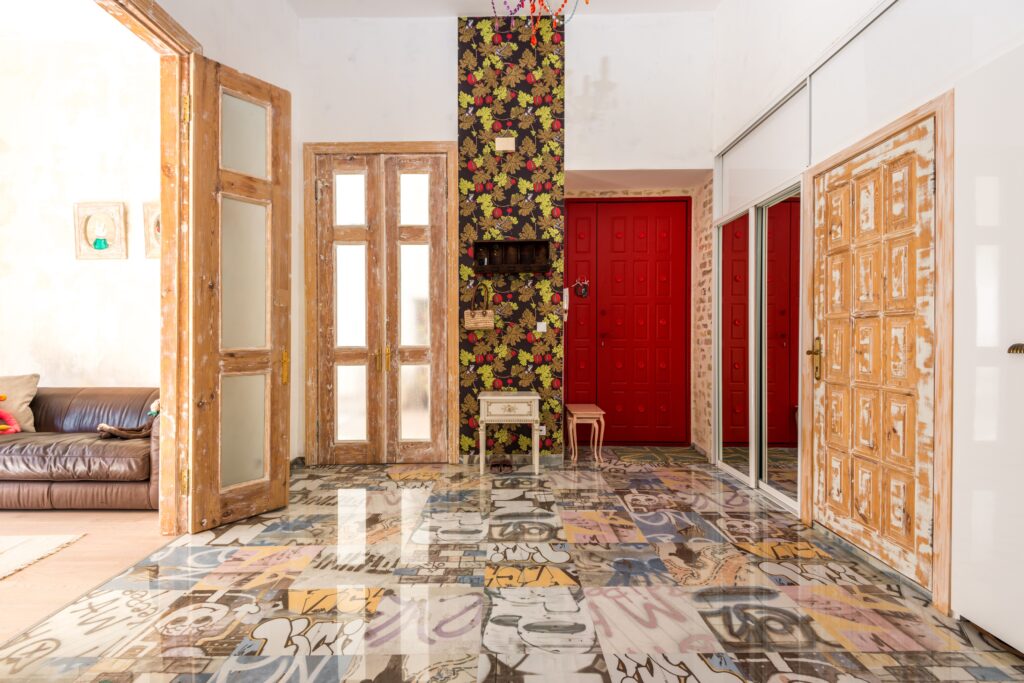
Your maximalist living room is a portrait of who you are. The more honestly and more fully it expresses your personality, your collections, your colors, and your history — the more beautiful it will be.
What happened when I stopped apologizing: I stopped editing my living room based on what I thought other people would approve of and started editing it based on what made me genuinely happy. The room became more specifically, more completely mine — and more beautiful as a result.
My friends’ reactions: The people who visit my maximalist living room always say the same thing — it feels exactly like you. That is the highest compliment any room can receive.
Pro Tip: The test of a truly beautiful maximalist living room is not whether it looks impressive in photographs — it is whether it makes you feel genuinely happy every time you walk into it. Design for that feeling and everything else will follow. For personal expression ideas check our guide on aesthetic living room ideas.
My Final Thoughts
Maximalist living room ideas taught me that the most beautiful homes are not the emptiest — they are the most genuinely personal. My living room is fuller than it has ever been and more beautiful than it has ever been — and those two facts are directly connected.
The bold foundation color, slowly built gallery wall, pattern mixing with one rule, generous textile layering, openly displayed collections, and dark dramatic walls had the biggest impact.
Start this weekend — paint one wall in your chosen bold color. That single change will show you immediately what your living room is capable of being.
Which of these maximalist living room ideas are you going to try first? Tell me in the comments — I would genuinely love to know!
For more small space inspiration explore all our articles on Tiny Room Style!
Pingback: Maximalist Bedroom Ideas: 10 Ways to Create a Bold Beautiful Personal Space - Tiny Room
Pingback: Maximalist Kitchen Ideas: 10 Ways to Create a Bold Beautiful Space - Tiny Room