
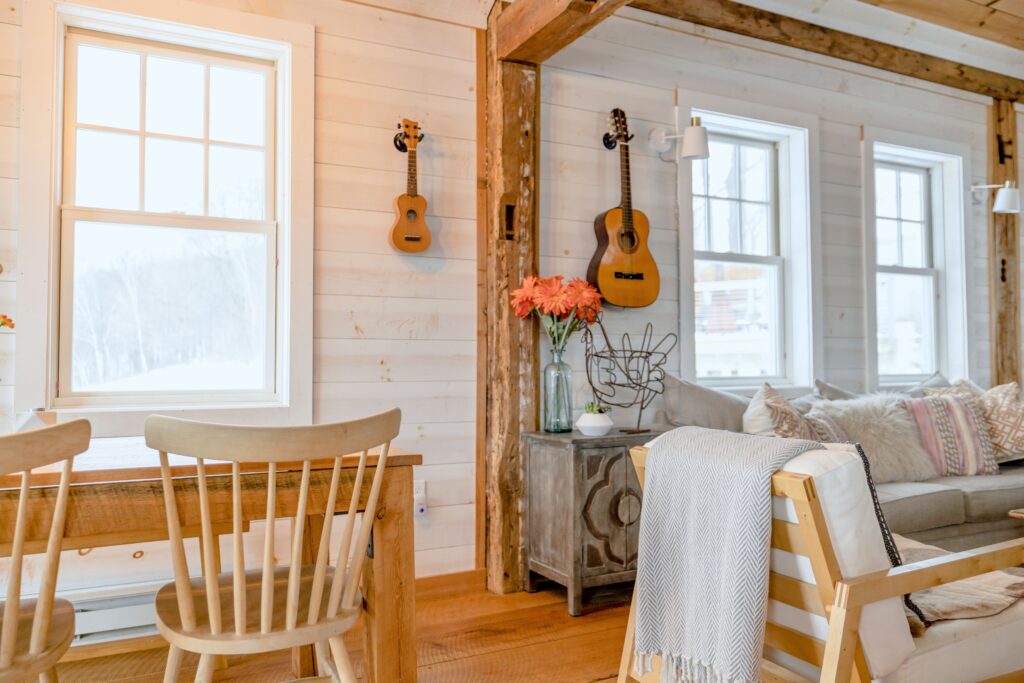
My older brother bought an old farmhouse about two hours outside the city a few years back, a genuinely run-down place with a sagging porch, a leaking roof he discovered only after the first heavy rain, and decades of questionable previous renovations layered haphazardly on top of each other by owners who clearly had very different ideas about what the place should look like. I spent an entire summer helping him slowly bring the main living room back to life, weekends and the occasional long evening spent stripping back layers of peeling wallpaper, sanding floors that had been hidden under decades-old carpet, and eventually discovering the original wood ceiling beams hidden beneath a sagging, water-stained dropped ceiling that had clearly been installed sometime in the seventies.
Somewhere in the middle of that long, dusty, genuinely exhausting summer, surrounded by paint chips and the constant smell of sawdust, I fell completely and somewhat unexpectedly in love with the particular blend of rustic warmth and clean, livable simplicity that modern farmhouse style actually represents at its best, once you strip away the slightly tired, overdone version of the trend that flooded so many home stores a few years back. When I returned to my own much smaller city apartment that autumn, tired and slightly sunburnt but genuinely changed by the experience, I found myself missing that particular warmth considerably more than I expected to, and I spent the following several months adapting what I had learned helping my brother into something that genuinely worked within my own compact, considerably less dramatic living room.
1. Understand the Careful Balance Between Rustic and Refined
Before changing anything in my own apartment, I spent real time thinking about what actually distinguished the farmhouse style we had gradually uncovered and rebuilt from anything overly rustic, genuinely old-fashioned, or simply dated, since modern farmhouse specifically depends on a careful, deliberate balance rather than leaning fully into either direction at the expense of the other.
Modern farmhouse design takes the warm, practical, slightly worn materials of genuine rural farmhouses, exposed wood beams, simple shiplap paneling, sturdy practical furniture built to withstand actual daily use rather than careful handling, and pairs them deliberately with cleaner, more contemporary lines and a considerably more restrained, less cluttered overall approach than a fully rustic or fully traditional country style would typically embrace. The resulting feeling is one of genuine warmth and welcome without ever tipping into feeling dated, overly busy, or like a theme park version of a working farm.
What this distinction meant for my own much smaller apartment specifically: I focused on warm wood tones and a handful of genuinely rustic textural elements, paired carefully and deliberately with simple, uncluttered furniture shapes rather than anything ornate or heavily decorated, a balance I genuinely had not fully appreciated or understood until working alongside my brother for an entire summer and watching how each individual decision either tipped the room toward feeling current or toward feeling like a dated theme.
My early misstep that taught me this lesson directly: Early in that renovation project, my brother and I initially considered adding several decorative wagon wheel accents and an abundance of rooster-themed kitchen textiles we had seen in older farmhouse decorating guides, and thankfully a friend who had actually trained in interior design talked us out of it before we committed to anything. She explained that genuine modern farmhouse style depends on restraint and simplicity, not literal, theme-park style references to rural life, a distinction that completely changed how I approached every subsequent decision.
Pro Tip: When pursuing modern farmhouse style in your own living room, pair every rustic, textural element you introduce with something clean and simple nearby, since the deliberate contrast between worn texture and clean lines is precisely what keeps this look feeling current and livable rather than dated or overly thematic. For more on balancing rustic and refined elements check our guide on cottagecore home decor small space.
2. Add Shiplap or Simple Wood Paneling to One Accent Wall
The genuine wood ceiling beams we uncovered in my brother’s farmhouse, hidden for decades beneath that sagging dropped ceiling, inspired me to bring some similar warm, textured wood into my own apartment, though obviously without any actual structural demolition or discovery process involved on my much more modest budget.
What I specifically did: I installed simple, affordable shiplap-style wood paneling on a single accent wall directly behind my sofa, painted in a warm, slightly worn white rather than anything stark, glossy, or perfectly uniform, allowing some subtle brush texture to remain visible in the finished paint.
Why I limited this to just one wall rather than the whole room: My brother’s entire farmhouse living room genuinely had exposed beams across the whole ceiling, which worked beautifully in that much larger, architecturally distinct space, but attempting the same density of texture throughout my considerably smaller apartment living room would have felt overwhelming rather than warm. One accent wall provides genuine texture and farmhouse character without consuming the entire room.
The installation process itself: Pre-finished shiplap panels, ordered online and installed over a single weekend with basic tools and a level, were considerably more straightforward than I anticipated, requiring no specialized carpentry skills beyond careful measuring and a willingness to make a few small adjustment cuts along the way.
Pro Tip: Pre-finished shiplap panels are widely available and install with minimal specialized tools, making this one of the most accessible and most affordable ways to bring genuine farmhouse texture into a rented apartment without any permanent structural changes. For more wall treatment ideas check our guide on renter friendly wall decor ideas.

3. Choose a Warm, Restrained Neutral Color Palette Throughout
My brother’s farmhouse living room eventually settled into warm whites, soft greys, and abundant natural wood tones once the full renovation was complete, a deliberately restrained palette that let the genuine architectural texture of the beams and original wide-plank floors do most of the visual work rather than competing with bold color choices.
Why I deliberately echoed that same restraint in my own apartment: Watching how quickly the farmhouse living room transformed once we settled on this limited, warm neutral palette taught me that modern farmhouse style depends heavily on restraint rather than abundance, a lesson that ran somewhat counter to my own usual decorating instincts in other rooms of my home.
What I specifically chose: Warm white walls throughout, a soft warm grey sofa, and natural oak furniture, introducing color only through a small number of carefully chosen textile accents rather than throughout every surface.
Pro Tip: Keep your base palette limited to warm whites and soft, warm-toned neutrals throughout the majority of your farmhouse living room, introducing color only through a few carefully chosen accents like cushions or a single piece of art, rather than scattering color throughout every available surface. For more color guidance check our guide on color schemes for small rooms.
4. Invest in a Genuinely Sturdy, Practical Coffee Table
A solid wood coffee table with a slightly distressed, hand-finished surface, built with exactly the kind of sturdy practicality that genuine farmhouse furniture has always carried out of necessity rather than purely for aesthetic effect, now anchors my entire living room.
Why practical sturdiness mattered so much to me after that summer: Watching my brother’s farmhouse furniture, much of it genuinely decades old and still in regular daily use, taught me to value pieces built to withstand actual life rather than delicate furniture that demands careful handling. My coffee table now bears a few small marks and scuffs I have deliberately chosen not to worry about, in the same spirit as the well-used farmhouse furniture that inspired this entire project.
Where I found mine specifically: A local furniture maker who specializes in reclaimed barn wood, giving the table genuine history and texture that new, uniformly finished furniture simply could not replicate.
Pro Tip: Look specifically for furniture described as having a hand-finished, reclaimed, or barn wood surface, since the slight texture, visible grain, and minor imperfection in these materials is genuinely central to authentic farmhouse character rather than an accident to be minimized. For more furniture ideas check our guide on small space furniture ideas.
5. Add a Large, Generously Comfortable Linen Sofa
A deep, generously cushioned sofa upholstered in warm white linen replaced my previous, considerably more formal and considerably less comfortable sofa, bringing exactly the relaxed, genuinely lived-in comfort that defines authentic farmhouse living far more than any specific decorative choice ever could.
Why comfort specifically became such a priority after that summer: My brother’s farmhouse sofa, an enormous, deeply cushioned piece that the whole family genuinely sank into during long evenings together, taught me that farmhouse style is fundamentally about creating a space people actually want to spend hours in, rather than a space that merely looks good in photographs.
The practical maintenance consideration: Choosing a slipcovered, machine-washable linen cover rather than a fixed, dry-clean-only upholstery felt appropriately practical for the down-to-earth spirit of this style, and has already proven genuinely useful after one memorable spilled glass of red wine during a dinner party.
Pro Tip: Choose slipcovered or genuinely washable linen upholstery for a farmhouse sofa specifically, since practical, easy-to-clean fabric suits the down-to-earth, lived-in spirit of this style far better than anything precious or dry-clean only. For more sofa ideas check our guide on small space furniture ideas.
6. Display a Collection of Vintage Woven Baskets
A small, gradually assembled collection of vintage woven baskets, several gathered directly from my brother’s barn during that renovation summer and a few more found subsequently at local secondhand shops, adds genuine rustic character throughout my open shelving in a way that new, uniform baskets never quite manage.
Why these specific baskets carry so much more weight than new ones would: The baskets from my brother’s barn had clearly been used for decades, for actual farm work rather than purely decorative purposes, and that genuine history shows in their slightly uneven weave and weathered color in a way that feels meaningfully different from anything purchased new and uniform.
How I actually use them now: Beyond pure display, these baskets hold throw blankets, remote controls, and various small household items that would otherwise clutter my open shelving, making them genuinely functional rather than purely decorative objects.
Pro Tip: Vintage woven baskets serve as both genuinely beautiful display objects and genuinely useful storage simultaneously, making them one of the most practical and most authentic farmhouse decor choices available for any living room. For more storage ideas check our guide on small apartment organization hacks.
7. Use Simple Black Metal Accents Throughout
Simple black metal light fixtures and a single black-framed mirror add exactly the clean, slightly more contemporary contrast that distinguishes genuine modern farmhouse style from a fully traditional, fully rustic country look that might otherwise feel dated.
Why black metal specifically provides this crucial balancing contrast: My brother and his interior design friend explained that the black metal accents found throughout most successful modern farmhouse spaces serve a specific structural purpose, grounding all that warm wood and soft neutral fabric with something cleaner and more linear, preventing the overall look from tipping too far into soft, sentimental territory.
Where I introduced black metal in my own apartment: A simple black pendant light above my reading corner, black hardware on my media console, and a single black-framed mirror, used sparingly rather than throughout every fixture in the room.
Pro Tip: Black metal accents, used sparingly and deliberately rather than throughout every single fixture, provide exactly the grounding contrast that keeps warm wood tones and soft textiles from feeling overly soft or sentimental, maintaining the contemporary edge that distinguishes modern farmhouse from purely traditional country style. For more on contrast in decorating check our guide on industrial living room ideas.
8. Add a Large Statement Mirror in a Weathered Wood Frame
A large mirror in a simple, slightly weathered wood frame, hung above my sofa, reflects natural light beautifully throughout the day while simultaneously adding genuine farmhouse character to what had previously been an entirely plain, somewhat forgettable wall.
Why I chose weathered wood over a more contemporary metal frame: A frame with visible grain and a slightly distressed finish reinforces the warm, natural material palette running throughout the rest of the room, while a sleeker metal frame, however attractive on its own, would have introduced a slightly different visual language that competed with rather than supported everything else.
The practical light-amplifying benefit I had not initially planned for: Beyond pure aesthetics, positioning this large mirror to reflect my living room’s main window has genuinely brightened the entire space considerably more than I expected when I first hung it purely for decorative reasons.
Pro Tip: A weathered wood frame on a large statement mirror does genuine double duty, amplifying natural light throughout the room while simultaneously reinforcing the warm, rustic material palette that defines authentic modern farmhouse style. For more mirror ideas check our guide on how to make a small living room look bigger.
9. Layer In Genuinely Cozy, Chunky Textiles
A chunky knit throw, draped casually over the arm of my sofa, and several woven cotton cushions in varying warm neutral tones bring genuine warmth and visible texture to my living room, echoing the practical, often handmade textiles my brother’s grandparents had originally left scattered throughout the farmhouse decades earlier.
Why chunky, visible texture matters so specifically to this aesthetic: Smooth, sleek fabrics read as considerably more contemporary and considerably less farmhouse than anything with visible knit texture or woven irregularity, a distinction I had not fully appreciated until comparing several throw options side by side in my own living room.
Where some of these textiles actually came from: One particular cushion cover, hand-knitted in a simple cable pattern, was a genuine gift from my brother’s neighbor, an older woman who had been knitting similar pieces for decades and who insisted on sending one home with me after hearing about my own decorating project.
Pro Tip: Chunky, visibly textured knits suit modern farmhouse style far better than smooth, sleek fabrics, reinforcing the handmade, practical spirit that is genuinely central to this entire aesthetic. For more textile ideas check our guide on cozy living room ideas.
10. Add Greenery in Simple Galvanized Metal Containers
A row of small plants, each potted in simple galvanized metal containers rather than ceramic or terracotta pots, brings exactly the practical, slightly utilitarian charm that defines genuine farmhouse style far more specifically than more decorative pot choices would.
Why galvanized metal specifically rather than more conventional ceramic pots: These containers directly reference the genuine metal buckets and feed troughs found throughout actual working farms, a practical, no-nonsense material choice that feels authentically connected to the style’s rural origins rather than purely decorative.
How I sourced mine affordably: A local hardware store, rather than any home decor retailer, had a far better and far more affordable selection of genuine galvanized containers than anywhere specifically marketed toward farmhouse decorating, a detail my brother had actually pointed out to me during the original renovation.
Pro Tip: Galvanized metal containers are widely available and genuinely inexpensive, often found more readily at hardware stores than decor shops, while instantly reinforcing the practical, working-farm character that is central to authentic modern farmhouse style. For more plant ideas check our guide on small space plants ideas.

My Final Thoughts
That dusty, exhausting, genuinely transformative summer spent helping my brother restore his old farmhouse changed how I think about warmth and practicality in any living space, and bringing some meaningful portion of that same careful balance into my own much smaller city apartment has been genuinely worth every single weekend it eventually took.
The shiplap accent wall and the restrained warm neutral palette made the single biggest difference for me personally, but it was ultimately the genuinely sturdy, slightly imperfect furniture choices, the coffee table I no longer worry about scuffing, that made the whole room feel authentically farmhouse rather than simply farmhouse-inspired.
Start with one accent wall of shiplap and a warm, restrained neutral palette, and let the rest of your living room build gradually around that foundation.
Which of these modern farmhouse living room ideas would you try in your own space? Tell me in the comments, I would genuinely love to know.
For more small space inspiration explore all our articles on Tiny Room Style!