
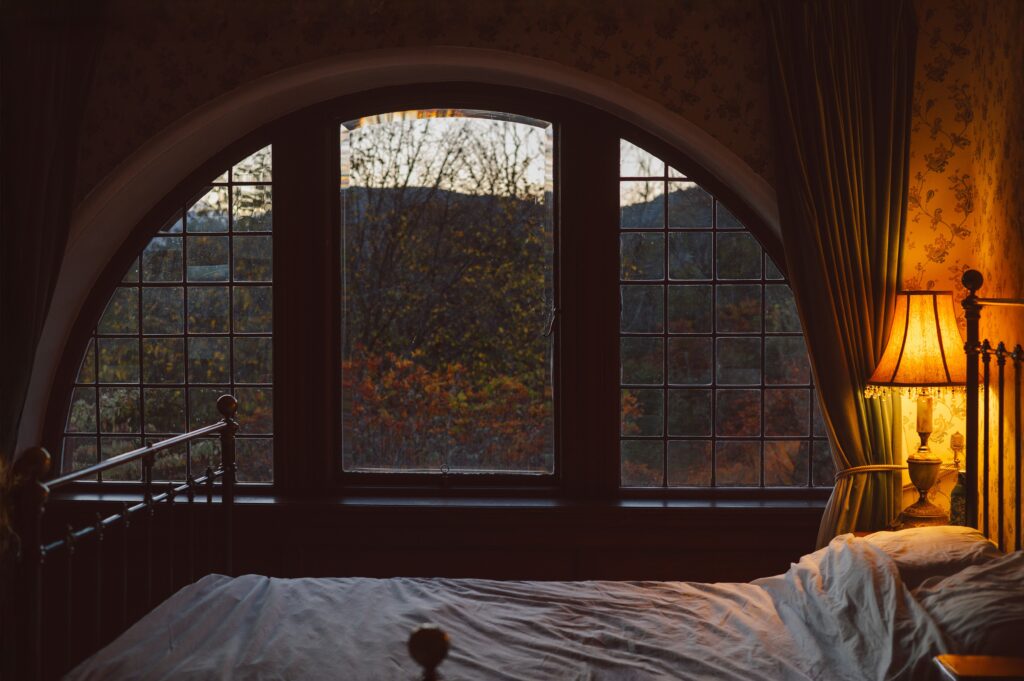
I spent a week one autumn staying in a tiny rented cottage in the English countryside, the kind of place with low, slightly sloping ceilings that made me duck instinctively every time I walked near the far wall, and a bedroom window that looked directly out over a garden gone slightly wild with the last of the summer roses still clinging stubbornly to their stems despite the encroaching cold.
The bed had a faded floral quilt that had clearly been washed and slept under for decades, its colors softened into something gentle and almost powdery rather than the crisp brightness of anything new. The walls were papered in a small-scale botanical print that had similarly mellowed with age into a quiet, comfortable presence rather than anything busy or overwhelming. On the windowsill sat a small, slightly uneven stack of well-worn paperbacks that previous guests had clearly left behind over the years, their spines cracked and their pages soft from handling.
I did not want to leave that bedroom. Something about its slightly imperfect, deeply lived-in charm felt more genuinely restful and more genuinely welcoming than any more polished, perfectly coordinated bedroom I had stayed in before that trip or since. I came home determined to bring some meaningful portion of that same gentle, charming coziness into my own bedroom, and over the following several months I gradually, patiently did exactly that. Here is everything I learned along the way, in as much honest detail as I can manage.
1. Understand the Gentle, Lived-In Charm at the Heart of English Cottage Bedroom Ideas
Before changing anything in my own space, I spent considerable time thinking about what had actually made that countryside bedroom feel so special and so different from any bedroom I had previously decorated myself, because it was clearly not about anything new, expensive, or perfectly coordinated in any conventional sense.
English cottage style draws from centuries of rural English domestic life, small rooms made genuinely cozy through layered textiles rather than spacious floor plans, floral and botanical patterns gradually softened by repeated washing and years of gentle sunlight rather than anything crisp and bright, and a real sense of accumulated, mismatched history rather than anything purchased as a complete coordinated set from a single catalog. It celebrates gentle imperfection as a feature rather than a flaw, treats low ceilings as cozy and enclosing rather than cramped or oppressive, and creates a softness throughout that feels deeply nurturing rather than precious or untouchable.
What this distinction meant for my own approach going forward: I deliberately stopped looking for anything crisp, brand new, or perfectly matched, the kind of decorating instinct I had relied on in most other rooms of my apartment, and instead actively sought out softened florals, slightly worn textiles, and furniture carrying genuine age and character rather than a flawless factory finish.
My early misstep worth mentioning honestly: I initially bought a brand new floral quilt described online as having a vintage-inspired print, and while the pattern itself was lovely, the crisp newness of the fabric and the bright, unfaded colors immediately undermined the gentle, lived-in feeling I was actually trying to create. It took returning that quilt and searching specifically for genuinely vintage secondhand textiles to finally capture the quality I remembered.
Pro Tip: When choosing anything for an english cottage bedroom, favor softened, slightly faded patterns and genuinely aged materials over anything bright, crisp, or obviously new, since gentle imperfection and the visible passage of time are absolutely central to this entire aesthetic rather than incidental to it. For more on cozy, romantic decorating approaches check our guide on cottagecore home decor small space.
2. Choose a Small-Scale Floral Wallpaper That Reads as Gentle Rather Than Busy
The wallpaper in that cottage bedroom had a small, gentle floral repeat that had clearly softened in color over many years of gradual sun exposure, and recreating that particular quality, rather than something louder or more saturated, took some genuine searching through countless wallpaper options.
What I eventually chose: A small-scale botanical wallpaper in muted dusty pink and sage green, with a tightly repeating pattern rather than anything large or sprawling, applied to a single accent wall directly behind my bed. I used a high quality peel-and-stick version specifically because I rent my apartment and could not commit to anything permanent.
Why the scale of the pattern mattered so much more than I initially expected: My first few wallpaper samples featured larger, more dramatic floral motifs, and even in similarly muted colors, the bigger scale read as bold and contemporary rather than gentle and cottage-like. A small, densely repeating pattern creates more of a textural, almost tweed-like overall impression from across the room, which is precisely the soft quality that defines authentic english cottage wallpaper.
The application process itself: Applying peel-and-stick wallpaper to just one wall took a full afternoon, working slowly and carefully to avoid air bubbles, and I am genuinely glad I limited myself to a single accent wall rather than attempting the whole room, both for the sake of the installation effort and because one wall provides plenty of pattern without overwhelming the gentle restraint this style depends on.
Pro Tip: Choose a small, densely repeating floral pattern rather than anything large-scale or bold, since the gentle, almost textural quality created by a tight, small repeat is what gives genuine english cottage wallpaper its characteristic softness, rather than any specific color choice alone. For more wallpaper ideas check our guide on grandmillennial bedroom ideas.
3. Layer a Genuinely Faded, Secondhand Quilt Over Your Bed
A vintage hand-stitched quilt, found secondhand at an estate sale with some genuinely visible fading along one edge and a few small, carefully repaired patches where previous owners had clearly mended worn spots over the years, brings exactly the soft, well-loved quality this entire style depends on far more convincingly than any new bedding ever could.
Why I specifically sought out something with visible age rather than anything pristine: As mentioned, my initial attempt with a new quilt taught me that crispness and bright color undermine this aesthetic almost entirely, regardless of how charming the printed pattern itself might be. The genuine fading and slight irregularity of hand stitching on an actual vintage piece carries a quiet authenticity that no amount of intentional distressing on new fabric quite manages to replicate.
How I found this particular quilt: It took attending several estate sales over roughly two months before I found one with both a pattern I genuinely loved and a level of wear that felt charming rather than actually damaged or fragile, a balance that took some patience and a willingness to walk away from several almost-right options along the way.
Pro Tip: Seek out genuinely vintage quilts at estate sales and secondhand shops rather than new reproductions, since the authentic fading, slight irregularity, and gentle wear built up over real decades of use is very difficult to convincingly replicate in anything manufactured new, however well designed. For more bedding ideas check our guide on bedroom ideas for women.

4. Add a Low, Cozy Window Seat Beneath Your Bedroom Window
A simple cushioned bench positioned directly beneath my bedroom window, piled generously with soft, mismatched cushions, recreates much of the cozy reading nook quality of that original cottage windowsill, where I remember sitting for hours simply watching the garden change throughout each day of that trip.
What I actually built rather than bought: Rather than searching for an expensive, purpose-built window seat, I used a simple, sturdy bench I already owned, positioned it beneath the window, and layered a thick cushion across the top along with several smaller decorative cushions leaned against the wall behind it.
Why this particular addition mattered so much to recreating the original feeling: That cottage windowsill was where I spent most of my actual time during that week away, reading and simply looking outside, and having a similarly cozy, low seating spot beside natural light in my own bedroom recreated more of that original restful feeling than almost any other single change I made.
Pro Tip: Even a simple, existing bench with generous cushioning can recreate the cozy, low window seat feeling central to this aesthetic, without requiring any expensive built-in carpentry or custom furniture commissioned specifically for the space. For more reading nook ideas check our guide on cozy room ideas.
5. Build Your Palette Around Soft, Muted Pastel Tones
Dusty pink, sage green, and warm cream throughout my textiles, cushions, throws, and curtains, bring exactly the gentle, slightly faded palette this particular style is genuinely known for, standing in deliberate contrast to brighter, more saturated color choices I had used in other rooms of my apartment.
Why muted specifically rather than simply pastel: There is a meaningful difference between a clean, bright pastel and a genuinely muted, slightly greyed tone, and I learned this distinction through some early trial and error with fabric swatches that looked lovely individually but felt subtly wrong once placed together in the actual room. The muted, slightly dusty quality of these specific colors mimics the natural fading caused by years of gentle sunlight, which is precisely the visual language this entire aesthetic speaks.
How I tested colors before committing to anything: I held fabric swatches up against the wallpaper sample and against each other in different lighting throughout an entire day, since several combinations that looked harmonious under bright midday light felt oddly mismatched once evening lamplight took over.
Pro Tip: Choose colors that genuinely look like they have been gently sun-faded over years rather than anything bright, crisp, or freshly saturated, since this particular muted softness, more than any single specific color choice, is essential to authentic cottage charm. For more color guidance check our guide on color schemes for small rooms.
6. Add Deliberately Mismatched Vintage Furniture Pieces
My bedside tables are deliberately two entirely different pieces, one a small painted wooden table with slightly chipped white paint revealing the wood underneath in places, and the other a simple woven wicker stand, both found secondhand at completely different times and from different sellers, with no attempt made to match them.
Why I resisted the urge to find a matching pair: My initial instinct, shaped by years of more conventional decorating habits, was to search for a matching set of bedside tables, but everything I found that matched felt slightly too coordinated and too new-looking for the genuinely cottage feeling I was trying to build. Embracing deliberate mismatch, two pieces gathered separately rather than purchased together, felt far more authentic to how an actual cottage bedroom would have genuinely accumulated furniture over many years of different owners and different eras.
How this principle extended to other furniture choices: My small writing desk in the corner similarly came from a different source entirely than my chair, and neither matches the wood tone of my bedside tables, which initially felt slightly uncomfortable to embrace but now reads as exactly the kind of gathered, lived-in quality I was originally chasing.
Pro Tip: Mismatched furniture, gathered slowly and individually over time from different sources, feels far more authentically cottage than any coordinated matching set ever could, even when that matching set is itself secondhand or vintage. For more furniture sourcing ideas check our guide on grandmillennial bedroom ideas.
7. Display Pressed Flowers and Gentle Botanical Prints
A small, loosely arranged gallery of pressed flower frames above my bed captures the same gentle botanical quality of the original wallpaper that first inspired this whole project, several months before I had settled on any other specific decision for the room.
Where the actual flowers came from: Most of the pressed flowers in these frames came from my own small balcony garden, picked at their peak and pressed between heavy books for several weeks before framing, which adds a layer of personal meaning that purchased prints, however beautiful, simply could not provide.
How I arranged the frames specifically: Rather than a perfectly symmetrical, evenly spaced grid, I arranged five frames in a loose, slightly irregular cluster, mimicking the kind of gradually accumulated collection that might have been added to gradually over many years rather than hung all at once according to a precise plan.
Pro Tip: Pressing your own flowers from a meaningful garden, even a small balcony container garden, adds genuine personal history and emotional weight that purchased botanical prints, however lovely, simply cannot match. For more botanical display ideas check our guide on cottagecore living room ideas.
8. Add a Worn Armchair Upholstered in Faded Floral Fabric
A small, genuinely worn armchair in the corner of my bedroom, upholstered in a faded floral fabric with some visible wear along the arms where countless hands had rested before mine, became my favorite reading spot in the entire apartment and brings real, undeniable character to the room that no new chair could replicate.
Where I found this particular chair: A secondhand shop specializing in older upholstered furniture, where the owner told me, with what genuine accuracy I cannot fully verify, that it had originally come from an actual English cottage estate sale several years earlier, which felt like a fitting, almost serendipitous origin story for exactly the piece I was looking for.
Why I left the slight wear untouched rather than reupholstering it: The temptation to have it professionally reupholstered in fresh fabric was real, but the existing wear and slightly faded pattern were precisely what made the chair feel authentically aged rather than simply old-fashioned in shape, so I left it entirely as I found it.
Pro Tip: A genuinely worn secondhand chair adds far more authentic charm and character to a cottage bedroom than a new chair deliberately distressed or aged to imitate that same quality, since real wear carries a believability that manufactured aging rarely achieves convincingly. For more seating ideas check our guide on cozy room ideas.
9. Use Warm, Soft Lamplight Rather Than Any Harsh Overhead Lighting
Two small ceramic lamps, each topped with a simple fabric shade in a warm cream tone, replace any harsh overhead lighting in my bedroom entirely, creating the same gentle, golden glow I remember so clearly from those quiet countryside evenings spent reading before sleep.
What I changed specifically about my lighting setup: I disconnected my main overhead bulb entirely, relying instead on these two bedside lamps as my sole light source in the evenings, along with a single small lamp on my writing desk for the rare occasions I need brighter task lighting during the day.
Why fabric shades specifically mattered so much more than I initially expected: A bare bulb, or even a glass shade, casts a notably harsher, more clinical light than light filtered gently through fabric, which diffuses and warms the glow considerably. The difference in actual atmosphere between my old overhead light and these two soft lamps is honestly more dramatic than I anticipated before making the change.
Pro Tip: Fabric lampshades diffuse and warm light far more gently than bare bulbs or glass shades, contributing enormously to the cozy, golden atmosphere that this entire style genuinely depends on for its characteristic charm. For more lighting ideas check our guide on small space lighting ideas.

10. Let the Room Develop Gradually and Imperfectly Over Time
The final and ultimately most important lesson from this entire project is one of patience, since my own cottage bedroom took several months, considerably longer than I initially expected, to feel genuinely right, and I sincerely believe it would feel less authentic and less meaningful if it had somehow come together instantly through a single weekend of shopping.
What I eventually had to accept about the process itself: Every time I felt impatient and tempted to simply buy a complete, coordinated cottage bedroom set from a single retailer to speed things along, I reminded myself that the entire appeal of that original holiday cottage came from decades of gradual, mismatched accumulation, not from any single coordinated purchase made all at once.
How this patience ultimately paid off: Looking at my finished bedroom now, I genuinely cannot point to any single shopping trip or weekend project as the moment it all came together, because it never happened that way. It emerged slowly, piece by piece, over several months, which is precisely why it now feels less like a styled photograph and more like a genuine, lived-in room.
Pro Tip: Resist the urge to buy an entire coordinated cottage bedroom set all at once from a single source, since the slow, patient gathering process, however much longer it takes, is itself a genuine part of what makes a finished cottage bedroom feel authentic rather than purchased as a complete kit. For more on collected, patient decorating check our guide on grandmillennial bedroom ideas.
My Final Thoughts
That autumn week in a tiny English cottage gave me some of the most genuinely restful nights I can remember from any trip I have ever taken, and recreating even a meaningful portion of that gentle, lived-in charm in my own bedroom, slowly and patiently over several months, has been entirely worth the wait it required.
The genuinely vintage quilt and the small-scale floral wallpaper made the single biggest difference for me personally, but it was ultimately the slow, unhurried gathering process itself, resisting any urge to rush or buy everything at once, that made the finished room feel real rather than simply decorated.
Start with one softened, genuinely vintage floral textile, whether a quilt or even just a single cushion, and let the rest of your room gather gradually and patiently around it from there.
Which of these english cottage bedroom ideas would you try in your own space? Tell me in the comments, I would genuinely love to know.
For more small space inspiration explore all our articles on Tiny Room Style!