
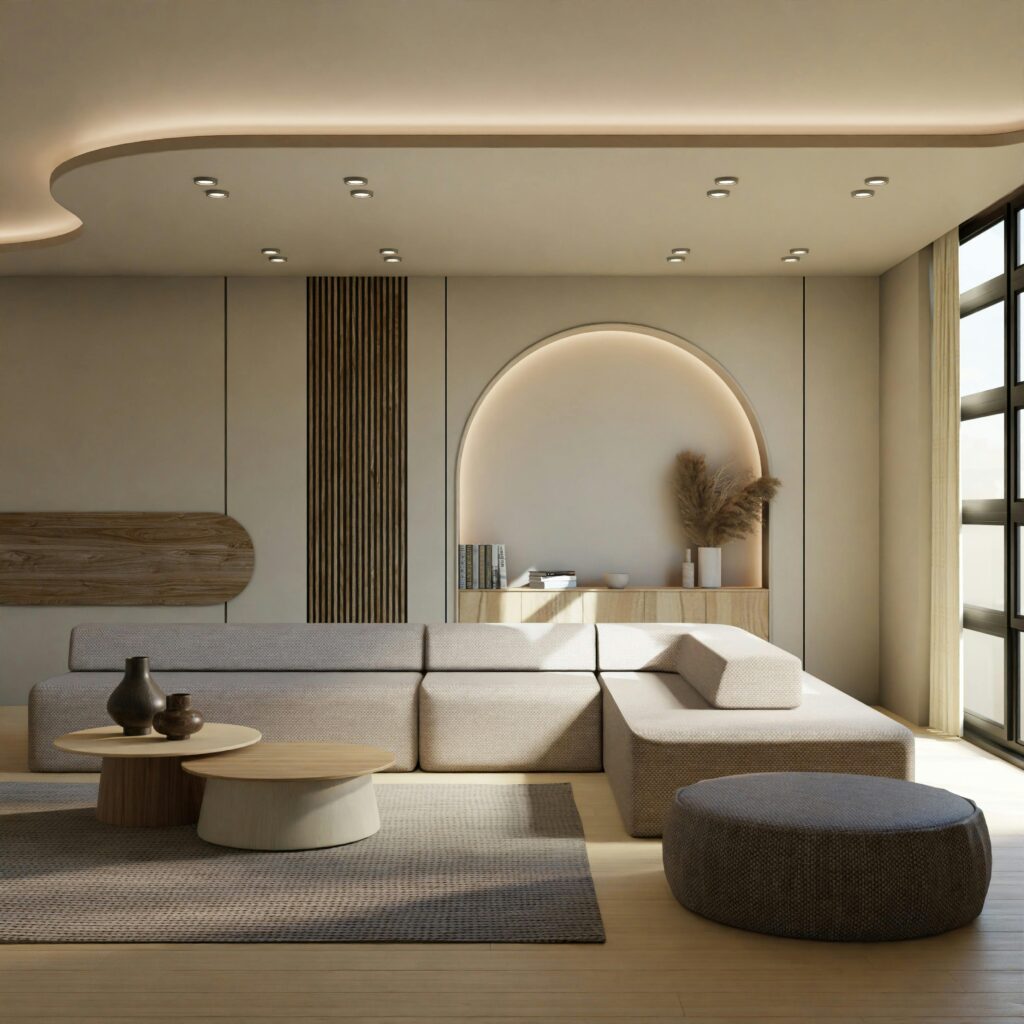
Two years ago I was burning out. My job was demanding, my social life was overwhelming, and my apartment — full of mismatched furniture, random objects, and perpetual low-level clutter — was adding to my stress rather than relieving it.
A colleague mentioned japandi. I looked it up, fell immediately in love with the aesthetic, and spent the following three months gradually transforming my small apartment.
The change in how I felt when I came home every evening was extraordinary. Not because I had more space — I had exactly the same amount. But because the space I had was now calm, intentional, and genuinely restorative.
Here is everything I learned about japandi interior design for small spaces!
1. What Japandi Actually Is
Japandi is a fusion of two design philosophies — Japanese wabi-sabi and Scandinavian hygge. On paper they seem like an unlikely combination. In practice they create the most perfectly complementary interior design philosophy I have ever encountered.
From Japanese design: The celebration of empty space. The appreciation of natural imperfection. The principle that every object must be beautiful or functional — ideally both. The idea that restraint is a form of abundance rather than deprivation.
From Scandinavian design: The love of natural materials. The celebration of warmth and comfort. The importance of cozy lighting. The idea that a home should be genuinely comfortable as well as beautiful.
What japandi is NOT: Cold minimalism. Clinical white spaces. Deliberately uncomfortable austerity. Japandi spaces are warm, comfortable, and genuinely inviting — they are minimal in clutter but abundant in warmth.
My experience: Before japandi my apartment felt like a storage unit with nice furniture. After japandi it felt like a genuine refuge — a place I actively looked forward to coming home to.
Pro Tip: The key principle of japandi interior design is that every object must earn its place through beauty, function, or both. If an object is neither beautiful nor functional — it does not belong in a japandi space. Apply this test to everything in your home and watch the transformation begin. For japandi bedroom ideas check our guide on japandi bedroom ideas.
2. Start With Warm White Walls
When I committed to japandi, the first thing I did was repaint my living room and bedroom walls warm white. I had previously had an accent wall in dark grey — which I had liked but which now felt heavy and slightly oppressive.
The warm white transformation was immediate and profound.
What warm white walls do in a small space: They reflect light maximally — making every room feel brighter and more open. They create a seamless backdrop that allows natural materials and carefully chosen objects to shine. And they make the space feel peaceful and intentional rather than busy and stimulating.
The crucial distinction: Warm white versus cool white. Warm white has a slight cream or ivory undertone — it feels genuinely inviting and cozy. Cool white has blue or grey undertones — it can feel clinical and cold. In a japandi small space, always choose warm white.
What I used: A warm white with the faintest hint of cream — it looks almost pure white in photographs but feels genuinely warm in person. Every plant, every piece of warm oak furniture, and every natural material looks more beautiful against it.
Pro Tip: Paint your ceiling the exact same warm white as your walls — the seamless visual transition from wall to ceiling makes any small space feel significantly taller and more open. The absence of a contrasting ceiling color removes a visual boundary that makes rooms feel more enclosed. For wall color ideas check our guide on color schemes for small rooms.
3. Choose Warm Oak Furniture
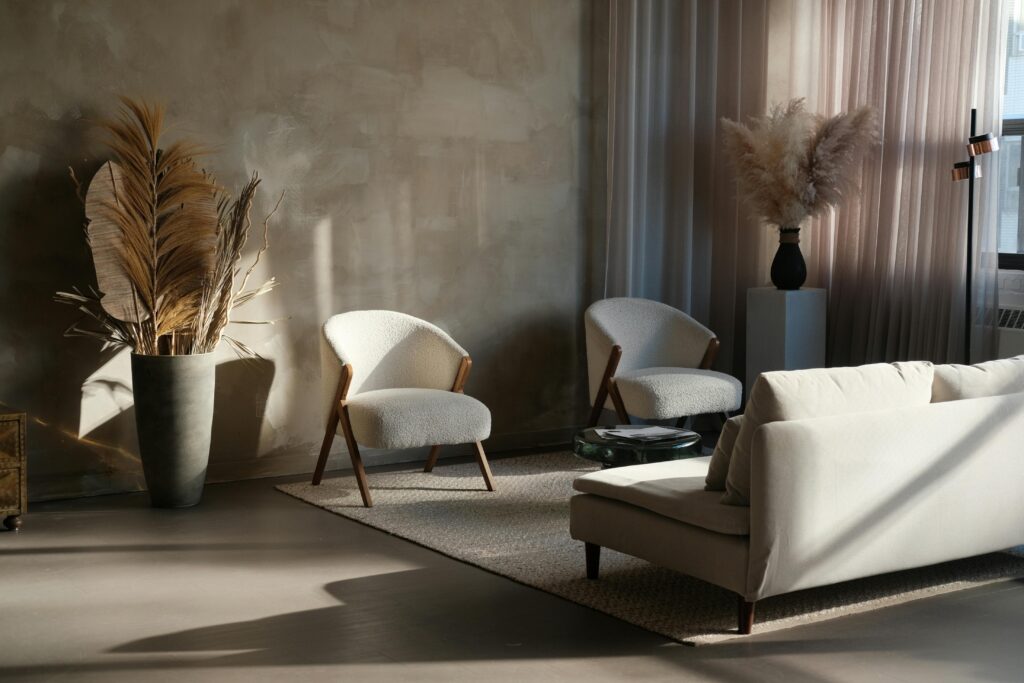
When I replaced my dark mahogany coffee table with a warm oak one, my entire living room changed.
The dark table had felt grounding but slightly heavy — it created a visual anchor that made the room feel smaller. The warm oak replacement felt light, natural, and warm — it added wood tone without adding visual weight.
The japandi approach to wood: Light to medium warm tones — pale pine, warm birch, natural oak — rather than dark or heavily stained woods. The grain and warmth of natural wood adds texture and life to white spaces without visually weighing them down.
How I use warm oak in my japandi small space:
- A warm oak floating desk — my primary work surface
- Oak floating shelves throughout — the most visible wood element
- A low oak coffee table — warm and natural at the center of my living space
- Small oak accessories throughout — a tray, a bowl, candle holders
My favourite japandi furniture investment: The floating oak shelves. They add warmth, storage, and display space without any floor footprint — perfect for a small space. And warm oak against warm white walls creates the most beautifully japandi visual combination I know.
Pro Tip: Mix different warm wood tones — pale pine accessories with warm oak furniture and medium birch accents — throughout your japandi small space. The layering of different warm wood tones creates organic richness that single-tone wood schemes cannot replicate. For wood furniture ideas check our guide on japandi living room ideas.
4. Embrace Empty Space
This was the hardest japandi principle for me to implement — and the most transformative.
I grew up in a home where every surface was covered, every wall was filled, and empty space was considered a problem to be solved. Learning to see empty space as a design element rather than a decorating failure took me several months of deliberate practice.
What helped me embrace empty space: I removed 60% of everything in my apartment and lived with the resulting emptiness for two weeks before adding anything back. Those two weeks were genuinely uncomfortable at first — my apartment felt bare and unfinished.
By the end of the two weeks, I had stopped noticing the absence of things and started noticing the things that remained. Each remaining object looked more beautiful, more intentional, and more significant than it had when surrounded by everything else.
What empty space does in a small japandi home: It makes rooms feel larger. It makes remaining objects feel more valued and more beautiful. It creates the visual quiet that allows you to genuinely rest when you come home. And it eliminates the constant low-level mental noise of visual clutter.
My empty space rules:
- Clear floor around all furniture — at least 60cm of clear floor on each side of my bed
- Surfaces mostly clear — each surface has maximum three objects with breathing room between them
- Walls mostly bare — only three frames above my bed and my floating shelves
- Wardrobe always closed — all clothing hidden
Pro Tip: Remove 50% of everything currently in one room and observe the effect for one week. The remaining objects will immediately look more beautiful and the space will feel more calm. You will probably find you do not want to put most of the removed items back. For decluttering ideas check our guide on small space living tips.
5. Use Warm Black Accents
Warm black is the element of japandi interior design that most people miss — and its absence is usually why japandi attempts feel closer to plain Scandinavian than authentic japandi.
What warm black adds to a japandi space: It brings the sophisticated Japanese edge that distinguishes japandi from plain Nordic minimalism. It creates visual anchors that prevent the warm white and natural wood palette from feeling too soft or undefined. And it adds a contemporary sharpness that keeps japandi from looking rustic or farmhouse-style.
Where I use warm black in my japandi small space:
- My desk lamp base — simple, clean-lined, warm black
- My picture frames — all warm black, consistently
- My curtain rod and rings — warm black metal
- Cabinet and drawer hardware — warm matte black
- One or two small accessories — a black ceramic vase, a black candle holder
The key is consistency: Warm black used inconsistently — one black item here, one chrome item there, one brass item somewhere else — creates visual noise. Warm black used consistently throughout creates intentional coherence.
Pro Tip: Replace all the mixed metal finishes in your home with two consistent finishes — warm oak for natural warmth and warm matte black for contemporary sharpness. This two-finish system is the most authentically japandi approach to materials throughout a small space. For japandi ideas check our guide on japandi bedroom ideas.
6. Add One Statement Plant Per Room
Before japandi I had plants scattered randomly throughout my apartment — a small succulent here, a random pothos there, a forgotten cactus in the corner. None of them made much visual impact individually.
After japandi I have one carefully chosen, beautifully positioned statement plant in each room — and the visual impact of each one is extraordinary.
My japandi plants:
- Living room — a large monstera in a white ceramic pot in the corner. It is now approximately 1.2 meters tall and makes a genuinely sculptural statement.
- Bedroom — a tall snake plant in a simple white ceramic pot. Clean, architectural, and virtually indestructible.
- Home office — a small trailing pothos on the shelf above my desk. Adds organic movement without visual busyness.
Why one large plant beats many small plants in a japandi space: In japandi design, each object should be significant. One large, healthy, beautiful plant is significant. Many small plants scattered around create visual noise that conflicts with the japandi principle of intentional restraint.
Pro Tip: Choose plants with strong architectural silhouettes for japandi spaces — monstera, fiddle leaf fig, snake plant, and olive tree all have clean, sculptural forms that complement japandi furniture and create genuine design statements rather than just decorative additions. For plant ideas check our guide on small space plants ideas.
7. Use Soft Warm Layered Lighting
The lighting transformation was one of the most immediately impactful changes in my japandi journey — and one of the most affordable.
Before japandi lighting: One overhead light per room. Cool white bulbs. Harsh and clinical in the evenings. Made my apartment feel like a place to complete tasks rather than a place to rest.
After japandi lighting: Multiple warm light sources at different heights. 2700K warm white bulbs throughout. The overhead light turned off after 6pm — replaced entirely by lamps, candles, and fairy lights.
My japandi lighting setup per room:
- Bedroom — two simple ceramic bedside lamps, warm white bulbs, and blackout curtains. No overhead light after 7pm.
- Living room — a paper pendant above the seating area, a floor lamp in the corner, and candles in the evening.
- Home office — a warm desk lamp and natural window light during the day.
The most important japandi lighting principle: The transition from daytime to evening lighting should be a genuine shift — from bright natural or overhead light to warm, dim, intimate lamp light. This shift signals to your body that it is time to rest, and significantly improves sleep quality.
Pro Tip: A Japanese paper pendant light — like those inspired by Isamu Noguchi’s Akari designs — is the most authentically japandi lighting choice for a living room or bedroom. It diffuses light in the most soft and beautiful way possible and adds an unmistakably Japanese design element. For lighting ideas check our guide on small space lighting ideas.
8. Choose Natural Materials Throughout
One of the most physically satisfying aspects of my japandi transformation was replacing synthetic materials with natural ones throughout my apartment.
What I replaced:
- Synthetic duvet → linen duvet
- Plastic storage boxes → rattan baskets
- Laminate shelving → solid oak floating shelves
- Synthetic cushion covers → linen cushion covers
- Plastic plant pots → white ceramic and terracotta pots
- Synthetic rug → natural wool rug
The cumulative effect: Each individual replacement felt modest. The combined effect of natural materials throughout my entire apartment was profound — my home felt warmer, more genuine, and more beautiful in a way that was difficult to articulate but immediately noticeable.
My theory: Natural materials — wood, linen, ceramic, stone, wool — have a quality of genuine-ness that synthetic alternatives lack. They age beautifully rather than looking worn. They feel good to touch as well as looking beautiful. And they connect indoor spaces to the natural world in a way that synthetic materials simply cannot.
Pro Tip: Replace your most visible synthetic material first — your bedding if it is synthetic, your most prominent storage boxes, your most visible plant pots. The most visible replacement will have the most immediate impact and motivate you to continue throughout your home. For natural material ideas check our guide on japandi living room ideas.
9. Add Wabi-Sabi Objects
Wabi-sabi — the Japanese aesthetic of finding beauty in natural imperfection — is the element of japandi that most distinguishes it from cold, clinical minimalism.
A perfectly minimalist space can feel sterile and inhuman. A japandi space feels warm and genuine — because it contains objects that are naturally imperfect, organically shaped, and humanly made.
My wabi-sabi objects:
- A handmade ceramic bowl on my coffee table — slightly irregular, beautifully imperfect, made by a local potter
- A piece of driftwood on my living room shelf — naturally shaped, unique, found on a beach I love
- A ceramic vase with a slight glaze imperfection — more beautiful for its flaw than it would be without it
- A linen throw with a small pulled thread — loved and used rather than pristine and preserved
What wabi-sabi objects do for a japandi space: They add humanity. They signal that the space is genuinely lived in and loved — not styled for a photograph. They create the warmth that pure minimalism often lacks.
Pro Tip: Look for handmade ceramics at local craft markets and pottery studios — pieces with slight irregularities and natural imperfections are the most authentically wabi-sabi and add the most warmth to a japandi small space. For wabi-sabi ideas check our guide on cottagecore home decor small space.
10. Maintain It With Daily Habits
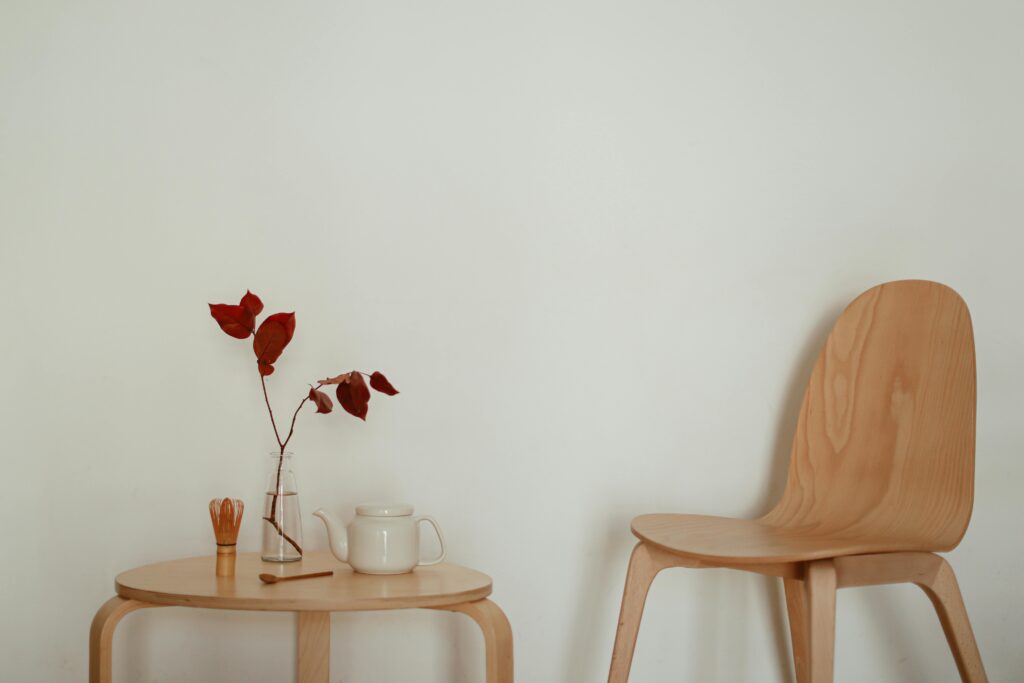
The final japandi principle — and the one that most people overlook — is that a japandi space requires daily maintenance habits to remain japandi.
Without consistent daily habits, clutter accumulates. Objects migrate from their designated places. Surfaces fill up. The calm that japandi creates gradually erodes.
My japandi daily habits:
- Make my bed immediately upon rising — takes three minutes, transforms the bedroom
- Clear every surface before leaving the apartment — everything in its designated place
- Process mail and paper immediately — file, action, or bin — never leave it
- Return everything to its home immediately after use — not later, immediately
- Ten-minute evening apartment reset — every evening before bed
These habits collectively take about fifteen minutes per day. In return they give me a home that feels calm, beautiful, and genuinely japandi every single morning when I wake up and every evening when I come home.
My experience: On the evenings I skip the reset — when I am tired or simply cannot be bothered — I notice the difference the following morning. The apartment feels slightly less calm, slightly less beautiful, and slightly more chaotic. Fifteen minutes of daily maintenance buys me twenty-four hours of genuine peace.
Pro Tip: Attach your japandi maintenance habits to existing daily rituals — make the bed immediately after getting up, clear the kitchen immediately after eating, reset the living room immediately after the evening news. Habits attached to existing behaviors are significantly easier to maintain than standalone habits. For daily habits check our guide on small space decor mistakes.
My Final Thoughts
Japandi interior design for small spaces gave me something I had not expected — a home that actively restored me rather than simply containing me.
The warm white walls, warm oak furniture, embraced empty space, warm black accents, one statement plant per room, and daily maintenance habits had the biggest impact. But every principle on this list contributed to creating a home that feels genuinely, profoundly calm.
Start this weekend — remove 50% of the objects from one room and live with the result for a week. That single experiment will show you the power of japandi empty space more effectively than any description can.
Which of these japandi interior design ideas are you going to try first? Tell me in the comments — I would genuinely love to know!
For more small space inspiration explore all our articles on Tiny Room Style!
Pingback: Japandi Bedroom Ideas: 10 Ways to Create a Calm Beautiful Sleep Sanctuary - Tiny Room