
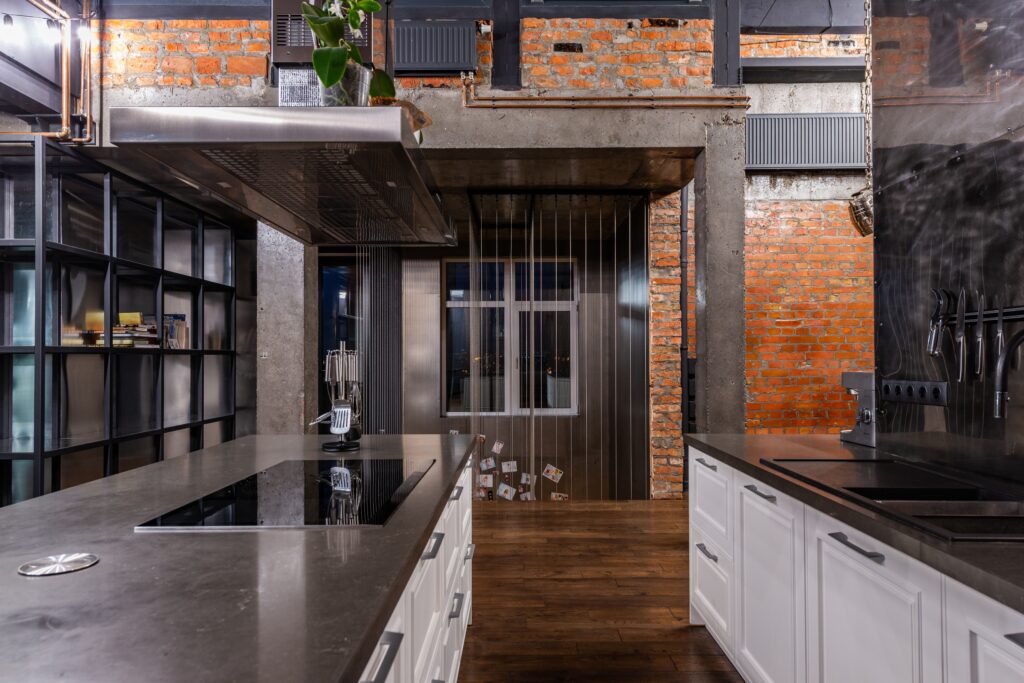
A close friend of mine converted an old textile warehouse unit into her apartment a couple of years ago, and the first time I visited I genuinely could not stop looking around. Exposed brick, visible ductwork left intentionally unpainted, a single massive steel-framed window letting in floods of afternoon light. It felt like nothing I had ever lived in, and nothing I had ever really considered for my own much more conventional apartment.
I went home that evening and started researching industrial style properly for the first time, mostly out of curiosity rather than any real plan to recreate it. But the more I read, the more I realized that several of the core principles, raw materials left honest rather than disguised, a restrained and slightly moody color palette, furniture with genuine history and weight to it, could actually be adapted into my own much smaller, much less architecturally dramatic rental living room. Here is everything I learned doing exactly that.
1. Understand the Honesty at the Heart of Industrial Living Room Ideas
Before changing a single thing, I spent time thinking about what actually made my friend’s converted warehouse feel so compelling, because it clearly was not really about specific furniture pieces.
What I eventually understood is that industrial style is built on a kind of material honesty. Brick stays brick rather than being plastered over. Pipes and ductwork stay visible rather than being boxed in. Metal stays metal, often with visible welds and rivets, rather than being smoothed and painted to disguise what it actually is. This honesty creates a specific kind of beauty, one rooted in function and history rather than decoration applied on top.
What this meant for my own apartment: I obviously could not expose actual brick or genuine ductwork in a standard rented apartment without any structural changes. But I could choose furniture, lighting, and finishes that honored that same principle of visible, honest materials, rather than trying to disguise or soften everything.
Pro Tip: Before buying anything for an industrial living room, ask whether the material is genuinely what it appears to be, real wood, real metal, real leather, rather than a printed or laminated imitation. Authenticity of material is the entire foundation of this style. For more raw material inspiration check our guide on dark academia room decor ideas.
2. Add an Exposed Brick Wallpaper if You Cannot Have the Real Thing
Since my apartment has plain plastered walls with no actual brick hiding behind them, I had to find a way to fake this signature industrial element convincingly.
What I used: A high quality, textured exposed brick wallpaper, applied to a single accent wall behind my sofa. The texture in this particular paper is genuinely raised and uneven, not flat printed, which makes an enormous difference to how convincing it looks once it is actually on the wall.
Why texture matters so much here: A flat, smooth printed brick pattern reads instantly as fake from across the room. A textured paper with genuine raised mortar lines and uneven brick faces catches light and shadow in a way that tricks the eye far more successfully, especially from typical living room viewing distances.
Pro Tip: Spend the extra money on a textured rather than flat-printed brick wallpaper, and apply it to just one wall rather than the whole room, since the texture and slight imperfection works best as a feature rather than an all-over backdrop. For wall treatment ideas check our guide on renter friendly wall decor ideas.
3. Choose Furniture With Visible Metal Framing
My old sofa had a completely hidden wooden frame, upholstered entirely in fabric with no metal visible anywhere, which felt distinctly at odds with the industrial direction I was now pursuing.
What I replaced it with: A leather sofa with exposed black metal legs and visible metal frame detailing along the arms, rather than fully upholstered legs hidden beneath a fabric skirt.
Why visible metal matters so much in industrial style: It is the most immediate, recognizable signal of the aesthetic, referencing factory equipment and warehouse fixtures directly. A sofa, coffee table, or shelving unit with genuinely visible black or raw steel framing instantly communicates the style in a way that fabric-covered furniture simply cannot.
Pro Tip: Look specifically for furniture described as having a metal or steel frame in product listings, rather than furniture that merely uses metal accents as small decorative details, since the framing itself needs to be substantial and visible to read as genuinely industrial. For more furniture ideas check our guide on small space furniture ideas.

4. Use a Restrained, Moody Color Palette
My living room before this project had fairly typical warm cream walls and light, neutral furniture throughout, which felt pleasant but completely wrong for the direction I was now taking.
What I changed: I repainted my walls a deep charcoal grey, several shades darker than I had ever used in any room before, and gradually replaced lighter furniture and accessories with pieces in black, deep brown, and aged metal tones.
Why moody, restrained color suits industrial style: The aesthetic draws heavily from old factories and warehouses, environments defined by raw concrete, aged metal, and dim working light rather than anything bright or decorative. A restrained palette of charcoal, black, and warm brown leather honors that same restrained, utilitarian mood.
Pro Tip: Charcoal or deep graphite grey walls work particularly well as an industrial base color, since they read as moody and raw without going as dark or dramatic as true black, which can feel overwhelming in a smaller living room. For color guidance check our guide on color schemes for small rooms.
5. Add a Statement Edison Bulb Light Fixture
A single bare Edison bulb pendant, hung directly above my coffee table with no shade or diffuser of any kind, became one of the most immediately recognizable industrial elements in my living room.
Why bare bulbs work so well in this style: The visible filament glowing inside an exposed bulb directly references old factory and warehouse lighting, where fixtures were chosen purely for function rather than decoration. There is something honest and slightly nostalgic about a light source that does not hide what it actually is.
The practical reality I had to manage: A single bare bulb provides considerably less ambient light than a shaded fixture, so I supplemented it with a floor lamp in the corner for evenings when I actually need to read or work rather than just enjoy the atmosphere.
Pro Tip: Pair a single statement Edison bulb fixture with at least one more practical, brighter light source elsewhere in the room, since bare bulbs prioritize atmosphere over genuine functional brightness. For lighting ideas check our guide on small space lighting ideas.
6. Layer in Genuine Leather
A worn brown leather armchair, found secondhand with some genuine scuffing and patina already built into its surface, became one of my favorite pieces in the entire room.
Why I deliberately chose a worn piece over a new one: Genuine leather develops character and history through use, and a brand new, pristine leather chair simply does not carry the same sense of accumulated time that industrial style relies on so heavily. The slight scuffs and softened creases in my secondhand find felt far more authentic than anything I could have bought new.
Pro Tip: Search specifically for secondhand or vintage leather furniture when building an industrial living room, since the existing wear and patina is genuinely difficult and expensive to replicate artificially on new leather. For more on sourcing characterful furniture check our guide on grandmillennial decor ideas.
7. Add a Reclaimed Wood Coffee Table
My coffee table is built from reclaimed scaffolding boards, paired with a black metal frame underneath, and its slightly rough, weathered surface carries genuine marks and grain variation that no new timber piece would have.
Why reclaimed wood matters so much here: Industrial style is fundamentally about repurposing materials with genuine working history, and reclaimed wood, with its nail holes, weathering, and inconsistent grain, embodies that principle directly rather than just referencing it decoratively.
Pro Tip: Look for furniture specifically described as made from reclaimed scaffold boards or reclaimed timber, since these pieces carry an authentic roughness that new wood, however intentionally distressed, struggles to genuinely replicate. For more table ideas check our guide on small space furniture ideas.
8. Use Open Metal Shelving for Storage and Display
A tall black metal shelving unit, with open wire shelves rather than solid wood, replaced a more traditional closed bookcase and instantly added the right kind of utilitarian character to my living room.
What I display on it: Books, a few carefully chosen plants, and a small collection of vintage metal storage tins, all benefiting from the open, slightly raw structure of the shelving itself rather than being hidden behind doors.
Pro Tip: Choose shelving with thin, simple metal framing rather than anything too decorative or curved, since the utilitarian simplicity is exactly what makes it read as industrial rather than merely modern. For shelf styling ideas check our guide on how to style bookshelves in small spaces.
9. Add Warmth Through Textiles Despite the Raw Materials
I quickly learned that an entirely raw, metal, and leather living room can start to feel cold and uninviting without some deliberate counterbalance, which surprised me initially.
What I added: A chunky wool throw in a warm rust color, draped over the arm of my leather chair, and two textured cushions in a similar warm tone on my sofa.
Why this balance matters: Industrial style at its best is not actually cold or harsh, despite the raw materials involved, because well-designed industrial spaces always include some layer of genuine warmth and softness to offset the metal and brick. Skipping this step leaves a room feeling unfinished and uncomfortable rather than authentically industrial.
Pro Tip: Choose textiles in warm, earthy tones like rust, mustard, or deep brown rather than anything pastel or pale, since these warmer colors complement raw metal and brick far more naturally than cooler tones would. For textile ideas check our guide on cozy living room ideas.
10. Add Plants to Soften the Raw Materials
A large fiddle leaf fig in the corner of my living room, alongside a trailing pothos on my metal shelving, ended up doing more to make the room feel genuinely livable than almost anything else I added.
Why plants matter so much in an industrial space specifically: All that raw metal, brick, and leather can start to feel like a single uniform texture without some living, organic contrast. Plants introduce genuine softness and color that immediately humanizes the space without compromising the overall aesthetic in any way.
Pro Tip: Choose plants with bold, architectural leaf shapes like fiddle leaf figs or monsteras rather than delicate, fussy varieties, since their strong silhouettes hold their own visually against substantial industrial furniture and raw materials. For plant ideas check our guide on small space plants ideas.

My Final Thoughts
That visit to my friend’s converted warehouse genuinely changed how I think about what a living room can be, and adapting those raw, honest principles into my own much more ordinary rented apartment turned out to be one of the most satisfying decorating projects I have ever taken on.
The exposed brick wallpaper and the worn leather armchair made the single biggest difference for me personally, but it was the warm textiles and the plants that ultimately made the whole room feel genuinely comfortable rather than just visually interesting.
Start with one piece of furniture that has genuine visible metal framing, and let the rest of the room build gradually around that one honest, raw foundation.
Which of these industrial living room ideas would you try in your own space? Tell me in the comments, I would genuinely love to know.
For more small space inspiration explore all our articles on Tiny Room Style!