
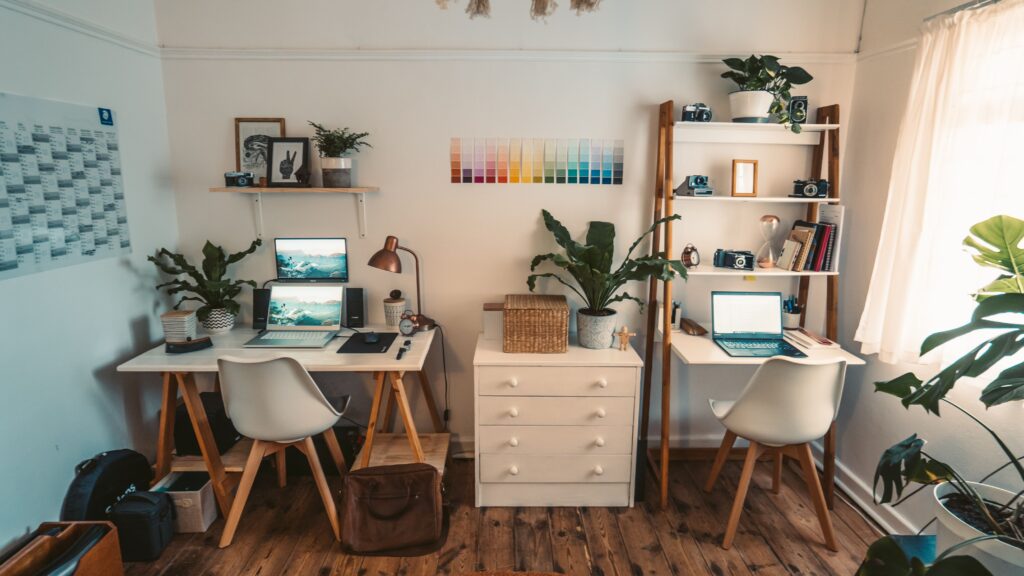
When I first started working from home full time, I set up my desk in the corner of my bedroom with whatever furniture I already owned, and I genuinely dreaded sitting down at it every morning. There was nothing wrong with it functionally, but it had no atmosphere whatsoever, and after about eight months of staring at the same uninspiring corner, I knew something needed to change before my motivation completely evaporated.
Around that time I had just returned from the same coastal trip that eventually inspired my kitchen transformation, and I found myself wondering whether that same sense of calm, breezy ease could translate into a workspace specifically. It seemed like an odd pairing at first, the relaxed energy of the coast applied to a room meant for focus and productivity, but it turned out to be exactly what I needed. Here is everything I learned creating a coastal home office that actually makes we want to sit down and work.
1. Understand Why Coastal Calm Suits a Home Office So Well
Before changing anything, I spent some time thinking about why a coastal feeling might actually help rather than hinder productivity, since most advice about home offices pushes toward energizing, stimulating environments rather than calm, breezy ones.
What I eventually realized is that the kind of focus required for sustained work benefits enormously from an environment that reduces visual noise and lowers background stress, rather than one that constantly stimulates and excites. Coastal style, with its pale colors, natural light, and uncluttered surfaces, does exactly that. It is calming without being sleepy, light without being sterile.
My personal experience confirming this: Within a few weeks of starting this transformation, I noticed I was settling into focused work faster in the mornings, with noticeably less of the restless, distracted feeling I used to have staring at my old uninspired corner setup.
Pro Tip: If you struggle to settle into focus at your desk, consider whether your workspace is too visually busy or too dimly lit, rather than assuming you simply need more willpower. For more on the coastal aesthetic generally check our guide on coastal living room ideas.
2. Position Your Desk Beside, Not Facing, a Window
My original desk faced directly into a blank wall with my back to the only window in the room, which in hindsight was almost a perfect formula for feeling cut off from any sense of light or air throughout the day.
What I changed: I turned my desk ninety degrees so it now sits perpendicular to the window, meaning I get the full benefit of natural light spilling across my work surface throughout the day without the glare and shadow problems that come from facing a screen directly toward or away from a bright window.
Why this small change mattered so much: Coastal interiors are defined by their relationship to natural light, and a desk facing a blank wall, however nicely decorated, misses that entirely. Simply repositioning my desk, at zero cost, did more for the overall feeling of the room than almost anything else I added afterward.
Pro Tip: If repositioning your desk perpendicular to a window is not possible due to room layout, at minimum avoid facing directly away from your only window, since this cuts you off from natural light for your entire working day. For more on arranging furniture around natural light check our guide on how to make a small living room look bigger.
3. Choose a Light Wood Desk With Clean Lines
My previous desk was a slightly heavy, dark wood piece inherited from a previous apartment, and it visually anchored the whole corner in a way that felt at odds with the light, breezy mood I was trying to create.
What I replaced it with: A simple desk in pale, almost bleached oak, with clean, unfussy legs and no ornate detailing whatsoever. The lightness of the wood tone alone changed the entire feeling of the corner before I had added a single accessory.
Why light wood specifically suits a coastal office: Driftwood and sun-bleached timber are core visual references for coastal style, and a desk in pale, naturally toned wood evokes that same quality without requiring anything literal or themed. It also reflects more light than a dark desk would, contributing to the overall sense of brightness.
Pro Tip: If buying a new desk is not in your budget right now, sanding back and applying a light whitewash finish to an existing dark wood desk can achieve a remarkably similar effect for a fraction of the cost. For more furniture ideas check our guide on home office decor ideas.
4. Hang Sheer Curtains Instead of Blinds
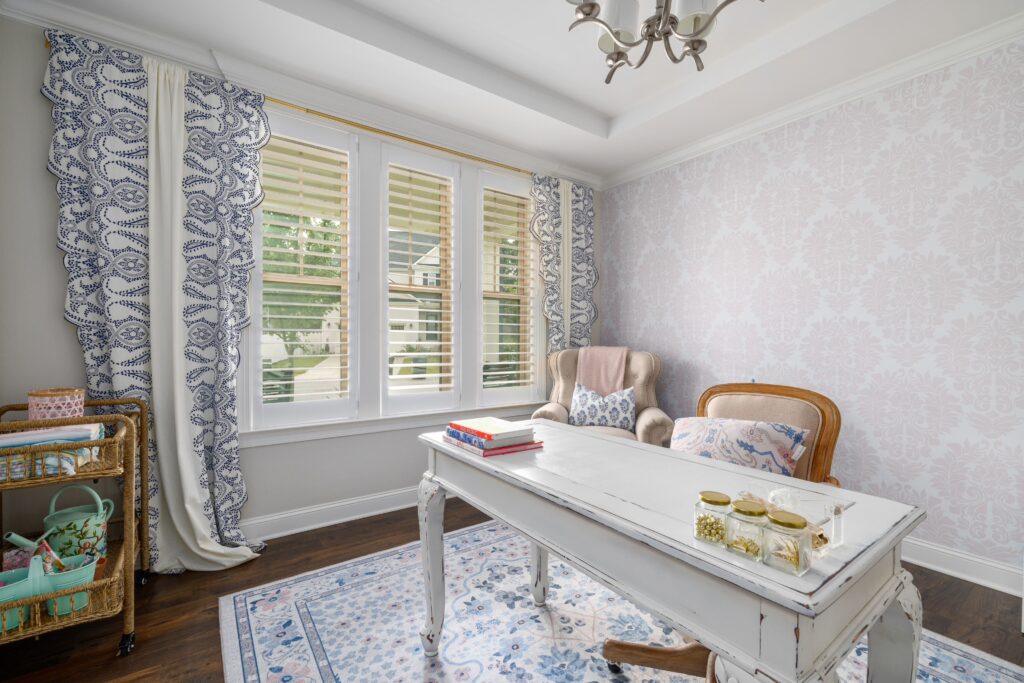
The window in my office originally had a slatted blind that I kept mostly closed, partly out of habit and partly because it blocked an uncomfortable midday glare on my screen.
What I changed instead: I replaced the blind with a sheer white linen curtain panel, which filters and softens the midday light rather than blocking it entirely, solving my original glare problem while still allowing genuine daylight to fill the room throughout the day.
The difference this made to my actual working hours: I used to switch on an artificial desk lamp by early afternoon most days, even in summer, because the closed blind left the room feeling dim. With the sheer curtain, I now rarely need artificial light before early evening, which has a noticeably positive effect on my energy and mood throughout the working day.
Pro Tip: A sheer curtain solves screen glare almost as effectively as a blind while sacrificing far less natural light, making it a better solution for most home offices than people initially assume. For more window treatment ideas check our guide on coastal bedroom ideas.
5. Add a Woven Rattan Chair or Accent Piece
A small rattan accent chair in the corner of my office, originally intended purely as a place to sit during phone calls away from my desk, ended up becoming one of the most visually important pieces in the entire room.
Why it works so well in this context: The natural woven texture immediately signals coastal style in a way that few other single objects can, and its open, airy structure means it adds presence to the room without adding visual heaviness, which matters enormously in a small home office where every piece of furniture competes for limited floor space.
How I actually use it: I sit there for phone calls, for reading printed documents away from my screen, and occasionally just to stretch my legs and look out the window for a few minutes between tasks. It has become a genuinely useful break spot, not just a decorative object.
Pro Tip: A single rattan chair, even a small inexpensive one, does more to establish a coastal feeling in a home office than almost any other furniture choice, because its texture is so immediately recognizable. For more natural texture ideas check our guide on coastal living room ideas.
6. Keep Your Desk Surface Genuinely Clear
This was, honestly, the hardest habit for me to build, since working from home tends to generate an endless stream of papers, notebooks, and half-finished projects that naturally accumulate on any available surface.
My current system: Only my laptop, one small notebook, and a single plant live permanently on my desk surface. Everything else, including reference papers and supplies, lives in a drawer or on a nearby shelf, and gets returned there at the end of every single working day without exception.
Why this matters so much for the coastal feeling specifically: Coastal interiors rely heavily on uncluttered, breathing space to create their characteristic sense of calm, and a desk covered in papers and odds and ends undermines that completely, regardless of how beautifully the rest of the room is decorated.
Pro Tip: Build a five minute end of day desk clearing habit, returning everything to its designated home before you finish working, rather than relying on willpower to keep your desk clear throughout an unpredictable working day. For more on maintaining calm surfaces check our guide on small space living tips.
7. Display Dried Botanicals Rather Than Fresh Flowers
A small ceramic vase holding dried pampas grass sits on the shelf above my desk, chosen specifically over fresh flowers for reasons that turned out to matter more than I initially expected.
Why dried works better in a working space specifically: Fresh flowers require regular changing and occasional water top ups that easily get forgotten during a busy work week, eventually leaving a sad, wilting reminder of neglect right in your eyeline. Dried botanicals simply sit there looking exactly the same for months, demanding nothing from you on days when you genuinely have nothing extra to give.
The visual effect specifically: The pale, sun-bleached tone of dried pampas grass fits the coastal palette even more naturally than most fresh flowers would, adding texture and softness without introducing any color that might clash with the rest of the room.
Pro Tip: Choose pale, neutral-toned dried botanicals for a workspace specifically, since they require zero ongoing maintenance, which matters considerably more in a room you depend on for daily productivity than in a purely decorative space. For more botanical display ideas check our guide on coastal living room ideas.
8. Use a Soft, Sandy Color Palette on Your Walls
My office walls were originally the same stark white as the rest of my apartment, which I had always assumed was the safest, most universally appropriate choice for a workspace.
What I changed: I repainted with a warm, sandy beige, several shades softer and warmer than the stark white I started with. The shift was subtle enough that visitors rarely comment on it directly, but it fundamentally changed how the room feels to actually sit in for hours at a time.
Why warmth matters more than people expect in a workspace: Stark white walls can feel clinical and slightly fatiguing over long working hours, in a way that a softer, warmer neutral simply does not. The sandy tone I chose also reflects light beautifully without any of the harshness that pure white sometimes carries.
Pro Tip: Test any potential wall color in the specific lighting conditions of your home office at the time of day you actually work, since a color that looks lovely in evening light might feel quite different during your actual working hours. For more on choosing colors check our guide on color schemes for small rooms.
9. Add a Cork or Linen Pin Board for Inspiration
A simple linen-covered pin board above my desk holds a small, carefully curated rotation of postcards, photographs, and the occasional handwritten note, rather than the chaotic accumulation of paper most pin boards seem to attract.
How I keep it from becoming cluttered: I limit myself to roughly eight items at any time, and whenever I want to add something new, I have to genuinely remove something else first. This constraint, borrowed from how I handle decorating decisions elsewhere in my apartment, keeps the board feeling curated rather than overwhelming.
Why a linen-covered board fits the coastal aesthetic specifically: A plain cork board reads as utilitarian and office-like, while one covered in soft, natural linen fits seamlessly into a calmer, more considered coastal room without looking like obvious workplace equipment.
Pro Tip: Limit any inspiration or pin board to a fixed number of items and enforce a genuine one in, one out rule, since unrestricted pin boards almost universally drift toward clutter within a few months. For more on intentional display check our guide on how to style bookshelves in small spaces.
10. Light With Warmth in the Evenings
My final and possibly most impactful change was simply paying attention to what light source I was using once natural daylight faded each evening, since I often work later than I should.
What I changed: A single warm-toned desk lamp, with a 2700K warm white bulb, replaced the harsh, cooler overhead light I had been using by default every evening. The difference in how the room feels after dark is honestly dramatic.
Why this connects back to the coastal feeling specifically: Even the calmest, brightest coastal room during the day can feel completely at odds with itself under harsh artificial light at night. A warm lamp maintains the same gentle, relaxed atmosphere into the evening hours that natural coastal light provides during the day.
Pro Tip: Switch your evening desk lighting to a warm-toned bulb rather than relying on a single bright overhead fixture, since the quality of evening light affects how calm or stressful a late working session feels almost as much as the room’s daytime decor does. For more lighting ideas check our guide on small space lighting ideas.
My Final Thoughts
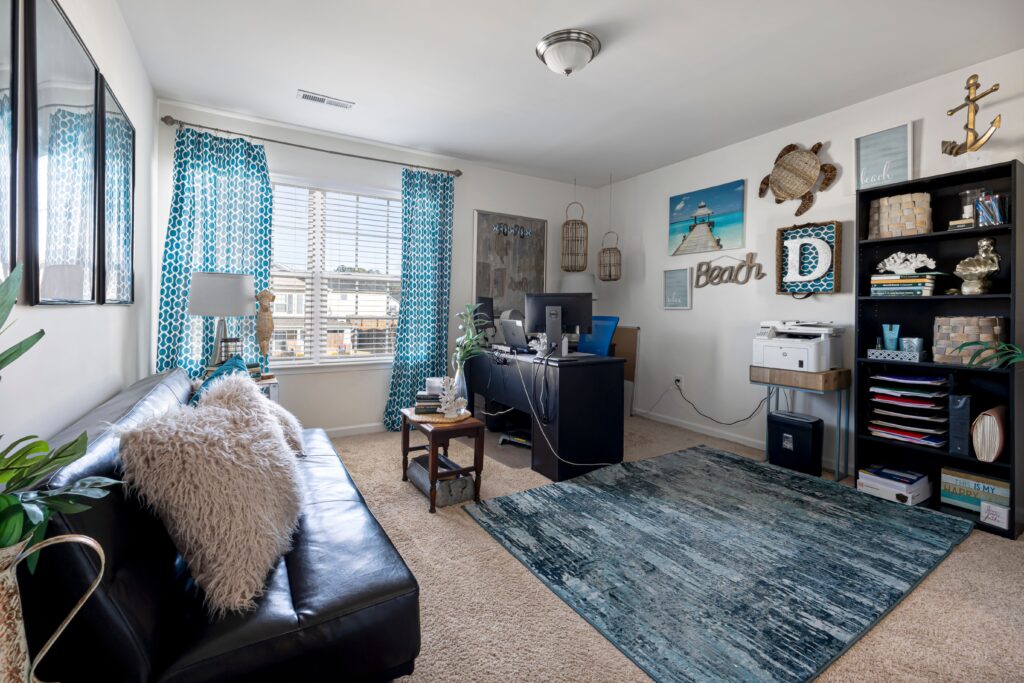
That same coastal trip that inspired my kitchen ended up reshaping my home office too, in ways I genuinely did not anticipate when I started. The room I once dreaded sitting down in has become a space I actually look forward to working in most mornings.
Repositioning my desk relative to the window and switching to sheer curtains made the single biggest difference for me personally, but it was the consistent discipline of keeping my desk surface clear that ultimately made the calm feeling sustainable day after day.
Start by simply moving your desk relative to your nearest window this weekend, and notice how much that one free change shifts the entire feeling of your workspace.
Which of these coastal home office ideas would make the biggest difference in your own setup? Tell me in the comments, I would genuinely love to know.
For more small space inspiration explore all our articles on Tiny Room Style!