
The moment that changed how I think about small space storage was a conversation with an architect friend who visited my first apartment.
She walked in, looked around for about thirty seconds, and then pointed straight up.
“You have three meters of wall height,” she said. “You are using about 1.2 of them. The other 1.8 meters is completely wasted.”
She was right. And when I started using those 1.8 meters — properly, intentionally, throughout every room — my 28 square meter apartment transformed from feeling cramped and storage-poor to feeling genuinely spacious and beautifully organized.
Here is everything I learned about vertical storage ideas for small spaces!
1. The Fundamental Principle — Your Floor Is Precious, Your Walls Are Free
Before getting into specific vertical storage ideas for small spaces, I want to share the principle that reframed everything for me.
In a small apartment, floor space is your most precious resource. Every piece of floor-standing furniture — every bookcase, every chest of drawers, every side table, every shoe rack — occupies floor space that could alternatively be clear, open, and making your apartment feel larger.
Your walls, by contrast, are essentially free. They go from floor to ceiling without interruption. They can hold shelves, hooks, rails, pegboards, and mounted furniture without occupying a single centimeter of your floor.
The implication: Every storage need that can be moved from the floor to the wall should be moved to the wall.
My apartment transformation: Over six months I moved my book storage from floor-standing bookcases to wall-mounted floating shelves. My bedside tables to floating bedside shelves. My kitchen spice storage from a counter rack to a wall-mounted magnetic system. My coat storage from a freestanding rack to wall-mounted hooks.
Each move recovered floor space, made the relevant room feel larger, and usually made the storage more beautiful as well.
Pro Tip: Walk through your apartment and identify every piece of floor-standing storage furniture. For each one, ask — could this be a wall-mounted equivalent? Floating shelf instead of bookcase. Wall hooks instead of coat rack. Magnetic strip instead of knife block. Mounted pegboard instead of desk organizer. The answers reveal your vertical storage opportunities. For small space living ideas check our guide on small space living tips.
2. Floating Shelves — The Most Impactful Vertical Storage Investment
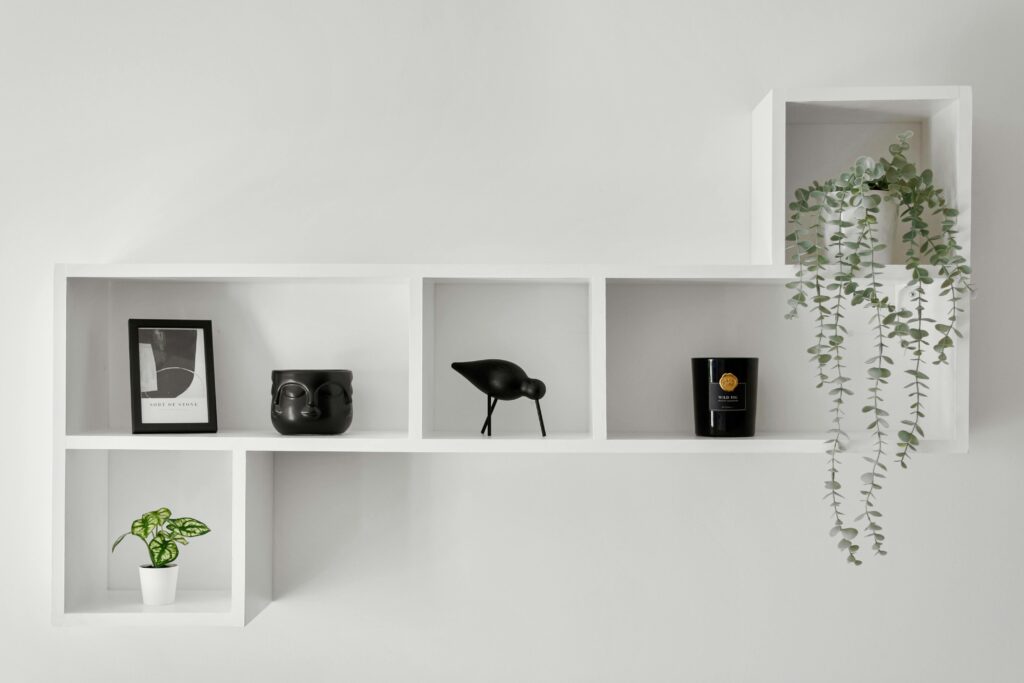
Floating shelves transformed my small apartments more than any other single vertical storage solution. I have installed them in every room of every apartment I have lived in for the past six years — and I have never once regretted a shelf installation.
Where I have installed floating shelves:
- Bedroom — two shelves on either side of my bed, at bedside table height, replacing bedside tables entirely and recovering significant floor space
- Living room — a floor-to-ceiling arrangement of staggered shelves on my main wall, holding books, plants, and personal objects
- Kitchen — two shelves above my counter for herbs, ceramics, and everyday items, keeping the counter clearer
- Bathroom — one shelf above the toilet (universally wasted space) for plants, rolled towels, and small accessories
- Home office — three shelves above my desk for books, plants, and supplies that would otherwise clutter my desk surface
My shelf installation advice: I use floating shelves with invisible mounting systems — the shelf appears to float on the wall with no visible brackets. This looks cleaner and more architectural than bracket-mounted shelves. But invisible mounting requires precise installation — I always use a spirit level and always anchor into studs or appropriate wall anchors.
Pro Tip: Install your shelves higher than feels immediately comfortable — the instinct is to install shelves at easy-reach height, but this wastes the upper wall space that is most unused. I install shelves at multiple heights — some at easy reach for frequently used items, some higher for less frequently used items. For floating shelf ideas check our guide on how to style bookshelves in small spaces.
3. Floor-to-Ceiling Shelving — The Most Dramatic Transformation
The most dramatic vertical storage transformation I ever made was installing floor-to-ceiling shelving on one complete wall of my living room.
What it replaced: Three separate floor-standing bookcases that together occupied approximately 1.2 square meters of floor space and still could not hold all my books.
What the floor-to-ceiling shelving achieved:
- Held all my books with room to spare
- Recovered 1.2 square meters of floor space
- Created a dramatic, library-like feature wall
- Added architectural interest to an otherwise plain room
- Made the room feel taller by drawing the eye upward
The installation approach: I used the BILLY bookcase system from IKEA, extended to the ceiling with BILLY height extension units. The combined units reached the ceiling and were anchored to the wall for stability. Total cost — approximately $280 for a 3.6 meter wide wall of floor-to-ceiling shelving.
The styling approach: I organized my books by color — creating a beautiful tonal display from warm cream through tan and brown to warm orange and terracotta. I interspersed plants, candles, and personal objects throughout. The result looked like a beautiful, designed library wall rather than obvious flat-pack furniture.
Pro Tip: The ceiling extension is the element that transforms floor-standing BILLY bookcases into floor-to-ceiling shelving — without it the bookcases look like bookcases. With it they look like built-in library shelving. The extension units are inexpensive and the transformation they create is disproportionate to their cost. For floor-to-ceiling storage ideas check our guide on ikea small space hacks.
4. Wall-Mounted Hooks — The Most Overlooked Vertical Storage
When I think about the vertical storage ideas for small spaces that have had the most impact relative to their cost, wall-mounted hooks consistently come near the top.
The hooks I have installed throughout my apartment:
Entryway: A row of five brass hooks at different heights on the wall beside my front door. These hold my everyday coat, my bag, tomorrow’s jacket, my umbrella, and a spare reusable bag. Before these hooks, all these items lived on a freestanding coat rack that occupied floor space and frequently fell over.
Bedroom door back: Three hooks for my dressing gown, tomorrow’s outfit, and my gym bag when packed. Nothing that was previously on the floor.
Kitchen: Three hooks under my open shelving for my most frequently used pots and pans. Dramatic improvement in kitchen organization and kitchen aesthetic simultaneously.
Bathroom: Two hooks on the back of the bathroom door for my towel and my bathrobe. One hook on the bathroom wall for my shower bag.
Home office: A row of hooks on the wall beside my desk for headphones, my camera bag, and charging cables when not in use.
Pro Tip: Choose hooks in a consistent finish throughout your apartment — I use warm brass throughout, which creates visual coherence and makes the hooks look like design elements rather than functional afterthoughts. Consistent hardware finish is one of the small details that makes a small apartment look genuinely designed. For hook storage ideas check our guide on entryway decor ideas.
5. Pegboards — The Most Flexible Vertical Storage System
I was resistant to pegboards for years — they looked utilitarian and workshop-like rather than beautiful and domestic. Then I installed a painted SKADIS pegboard above my desk and immediately understood why they have become so popular in small space design.
What makes pegboards genuinely useful for small spaces: Their flexibility. Every hook, shelf, and container can be moved and reconfigured without tools or wall damage. As my needs change — which they do regularly — my pegboard adapts without requiring new installations.
My pegboard installation: A SKADIS pegboard from IKEA, painted warm white to match my wall before installation. Mounted above my desk with a combination of SKADIS hooks, one small SKADIS shelf, and two non-IKEA additions — a small rattan basket and a ceramic pot.
What it holds: My headphones. My scissors and tape. A small succulent. My most frequently referenced notebook. My phone while charging. A small scented candle. All of these items were previously on my desk surface — their migration to the pegboard cleared significant desk space and made my work environment significantly calmer.
The styling insight: A pegboard that is too full looks cluttered. A pegboard that holds exactly the items you use every day, with small decorative elements interspersed, looks designed and intentional. Edit your pegboard regularly — remove anything you have not reached for in a week.
Pro Tip: Paint your pegboard the exact same color as your wall before installation — this makes the board itself almost disappear, leaving only the items stored on it visible. The result looks like a designed storage installation rather than a pegboard. For pegboard ideas check our guide on home office decor ideas.
6. Over-Door Storage — The Most Universally Overlooked Space
The back of every door in your apartment is free storage space that most people never use.
I discovered this through necessity — in my smallest apartment I had run out of conventional storage options and was looking for overlooked spaces. Door backs were the most immediately available.
What I store on door backs throughout my apartment:
Bedroom door: An over-door organizer with twelve pockets. Currently holding: my most frequently worn accessories, a spare phone charger, hand cream, lip balm, my earbuds, and small items that previously lived on my dresser surface.
Bathroom door: A slim over-door organizer for hair tools, products used daily, and small bathroom accessories. Previously these items lived on my limited bathroom shelf space.
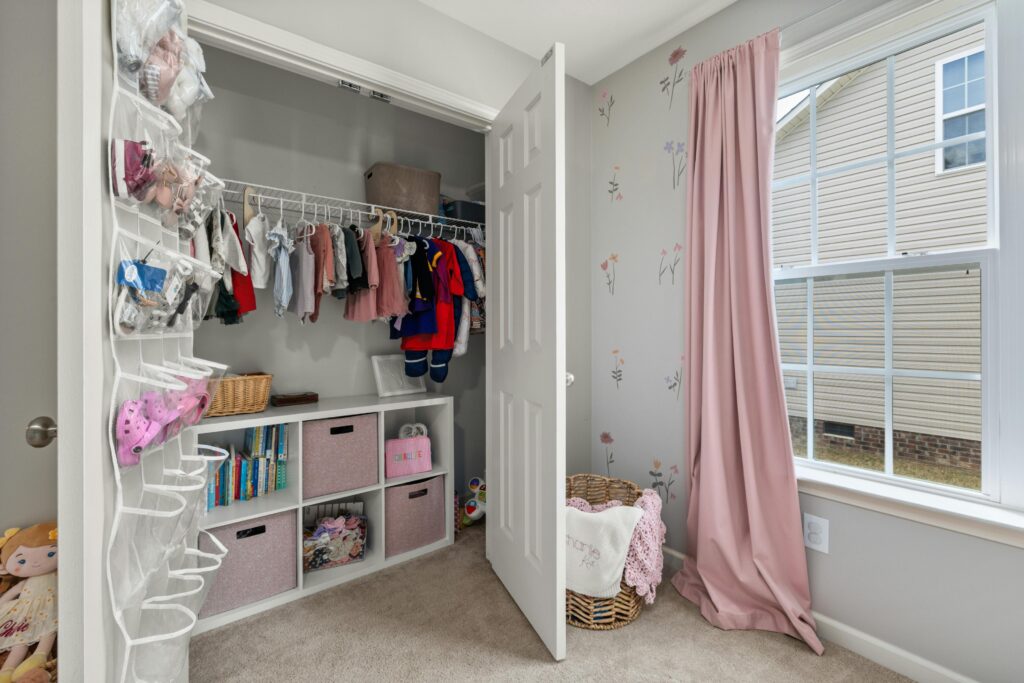
Wardrobe doors inside: A shoe organizer on each inside door. I use the pockets not just for shoes but for accessories, folded belts, and small items that previously cluttered my wardrobe shelves.
Kitchen cabinet doors inside: Mounted spice racks on the inside of my largest cabinet doors. My spice collection moved from counter space to door space — recovering significant counter area.
Pro Tip: Measure the clearance between your door and the adjacent wall or frame before buying over-door organizers — some doors have very limited clearance that prevents standard organizers from being used, or causes the door to drag when closing. For door storage ideas check our guide on small closet organization ideas.
7. Tall Narrow Furniture — The Most Space-Efficient Floor Storage
When floor-standing storage furniture is unavoidable — and sometimes it is — tall narrow furniture is significantly more space-efficient than wide shallow furniture.
The comparison: A wide bookcase 120cm wide and 30cm deep occupies 0.36 square meters of floor space and provides a certain amount of storage. A tall narrow bookcase 40cm wide and 30cm deep occupies only 0.12 square meters — one third of the floor space — and provides more storage per floor meter because it uses the full wall height.
The tall narrow furniture I use:
- A tall narrow shoe cabinet in my entryway — holds twelve pairs of shoes in a 0.12 square meter footprint
- Tall narrow floating corner shelves — using the corner space that wide furniture cannot reach
- A tall narrow bathroom cabinet — providing significant bathroom storage in the smallest possible footprint
- A tall narrow kitchen shelf unit — using the wall space between my kitchen counter and my refrigerator
Pro Tip: Corners are the most overlooked tall vertical storage opportunity — most furniture cannot fit into corners, leaving them wasted. Corner floating shelves — triangular shelves that fit exactly into corner angles — use this otherwise dead space for beautiful and useful vertical storage. For space-efficient furniture ideas check our guide on small space furniture ideas.
8. Magnetic and Rail Storage Systems
Magnetic and rail storage systems were the vertical storage discovery that transformed my kitchen — and that I subsequently applied in other rooms with equally good results.
My kitchen magnetic system: A magnetic knife strip mounted on the kitchen wall beside my stove. My knives moved from a counter-top knife block — occupying significant counter space — to the wall. Counter space recovered, knives more safely and hygienically stored, and more visually accessible.
My kitchen rail system: A GRUNDTAL rail from IKEA mounted on the wall above my counter. Hanging S-hooks hold my most frequently used utensils, a small container for my most-used spices, and a small plant. Everything that was previously on my counter surface.
Beyond the kitchen: I adapted the rail system concept for my bathroom — a simple towel rail with S-hooks holds my hair tools, hanging to dry and always accessible. For my home office — a small rail with hooks beside my desk holds my headphones, my bag, and my most frequently used cables.
Pro Tip: The magnetic knife strip is one of the highest-impact, lowest-cost kitchen vertical storage ideas available — it recovers counter space, looks professional, and makes knives more accessible and more safely stored simultaneously. It is one of the first things I install in every new kitchen. For kitchen organization ideas check our guide on how to organize a small kitchen.
9. Ceiling Storage — The Final Frontier
Ceiling storage is genuinely unusual — most people never consider it — and for certain specific purposes it is extraordinarily effective.
Where I use ceiling storage:
Hanging plants: My most significant use of ceiling storage. I have four plants hanging from ceiling hooks throughout my apartment — a trailing pothos in the living room, a string of hearts in my bedroom, a hanging fern in my bathroom, and a trailing ivy in my kitchen. Each hangs from a single ceiling hook. None occupies any floor or shelf space. All are beautiful.
Bike storage: In my previous apartment I hung my bicycle from two ceiling hooks in my hallway — the only place it could be stored in a 28 square meter apartment. This sounds impractical but the installation took thirty minutes and the bicycle hung perfectly safely and completely out of the way for eighteen months.
Overhead kitchen rack: A pot rack suspended from the kitchen ceiling held my most frequently used pots and pans above my counter — freeing the cabinet space they had previously occupied for other uses.
Pro Tip: Ceiling hooks must be anchored into ceiling joists — not just plasterboard — for any significant weight. Always locate joists before installing ceiling hooks and verify the anchor is secure before loading. For plants, most ceiling plasterboard is sufficient with appropriate plasterboard anchors — for bicycles and heavy pots, joist anchoring is essential. For ceiling storage ideas check our guide on small space plants ideas.
10. Style Your Vertical Storage Beautifully
The final vertical storage idea for small spaces is perhaps the most important — because vertical storage that looks beautiful is significantly more valuable than vertical storage that merely functions.
Vertical storage that looks beautiful improves the aesthetic of your apartment while organizing it. Vertical storage that looks utilitarian — random hooks, mismatched shelves, cluttered pegboards — organizes your apartment while making it look worse.
How I make my vertical storage beautiful:
Consistent finishes: All my hooks are warm brass. All my shelf brackets are the same style. My pegboard matches my wall color. Consistent finishes make vertical storage look designed rather than assembled.
Considered styling: My floating shelves are styled using the rule of odd numbers — objects grouped in threes, varying heights, with deliberate breathing space between groups. My hooks hold items arranged by frequency of use and visual weight. My pegboard is edited regularly so it never becomes cluttered.
Natural elements: Every vertical storage area in my apartment has at least one plant. A small trailing pothos on a shelf, a tiny succulent on a pegboard, a plant hanging from a ceiling hook. The presence of living plants in vertical storage areas makes them feel genuinely beautiful rather than merely functional.
Color cohesion: The items stored on visible vertical storage — the books on my shelves, the plants in their pots, the objects on my pegboard — are all within my apartment’s color palette. Nothing jarring, nothing clashing. The vertical storage reinforces my aesthetic rather than competing with it.
Pro Tip: Spend as much time planning how your vertical storage will look as how it will function — beautiful vertical storage improves your apartment twice over: it organizes your space and it enhances its aesthetic. Purely functional vertical storage only does one of those things. For shelf styling ideas check our guide on how to style bookshelves in small spaces.
My Final Thoughts
Vertical storage ideas for small spaces genuinely transformed my experience of living in compact apartments — recovering floor space, creating storage capacity I had not known I had, and making every room feel more spacious, more beautiful, and more genuinely mine.
The floating shelves, floor-to-ceiling shelving, wall-mounted hooks, and over-door storage had the biggest immediate impact. But every vertical storage idea on this list contributed to the transformation.
Start this weekend — install two floating shelves in your bedroom to replace your bedside tables. The floor space you recover and the architectural quality you add will immediately show you the power of vertical storage in a small space.
Which of these vertical storage ideas for small spaces are you going to implement first? Tell me in the comments — I would love to know what transforms your space!
For more small space inspiration explore all our articles on Tiny Room Style!
Pingback: IKEA Small Space Hacks: 10 Genius Ways to Maximize Your Tiny Home - Tiny Room
Pingback: Small Closet Organization Ideas: 10 Ways to Maximize Your Tiny Closet - Tiny Room
Pingback: IKEA Small Space Hacks: 10 Genius Ways to Maximize Your Tiny Home - Tiny Room